• Skip to main content
  • Skip to primary sidebar
  • Skip to footer

Looseleaf Editorial & Production

Book Editing & Design

  • Editing
    • Big-Picture Editing
    • Line Editing
    • Copyediting & Proofreading
  • Book Design
    • Book Layout
    • Ebook Formatting
    • Other Graphic Design
  • About
    • The Team
    • Our Work
    • Find Your Fit
    • Testimonials
  • Resources
    • Resources
    • Events
  • Blog
  • Contact

punctuation

The Dash Family and Saying What You Mean

January 23, 2012 by Kristy S. Gilbert 2 Comments

Hyphen-Dash Family

There are some people who don’t bother much with punctuation or think that quibbles about commas are purely subjective. In some instances I’d agree with them, but overall, punctuation exists to help you say what you mean. Punctuation helps you emphasize what you want emphasized and communicate nuances of meaning you would add if you were speaking to your reader in person.

That’s why I find the differences between the three members of the Hyphen-Dash family absolutely critical. Just like any other family, the members share some traits, but have their own distinct qualities. Those qualities help you say way you mean when you write. I can’t cover all the nuances of the Hyphen-Dash family here, but I can give you a crash course.

Meet Hyphen

Little Hyphen is the smallest member of the Hyphen-Dash clan. He looks like this: -. For contrast, here’s en dash (–) and em dash (—). He’s so common that you can use him to verb something. And yet Lynne Truss, the delightful author of my favorite punctuation book, Eats, Shoots and Leaves, calls Hyphen “a little used punctuation mark” in her chapter about him. That’s because Hyphen is confusing, and he’s an utter pain to use correctly.

Figuring out when to hyphenate a noun is relatively easy. If you want to know if you should say butter fly, butter-fly, or butterfly, you go to Merriam-Webster, type in any of the options, and see which one pops up. Simple. (Unless we’re talking about something like e-mail versus email, in which case it gets more complicated.)

Hyphenating adjectives trips more people up. I’m going to focus on the trickiest instances. The important thing to remember is that Hyphen exists to clear up ambiguities. Thus, to use Truss’s examples, you hyphenate shell-like because having three Ls in a row is a mess, and you hyphenate de-ice because deice could very easily be a word that meant something other than getting ice to go away.
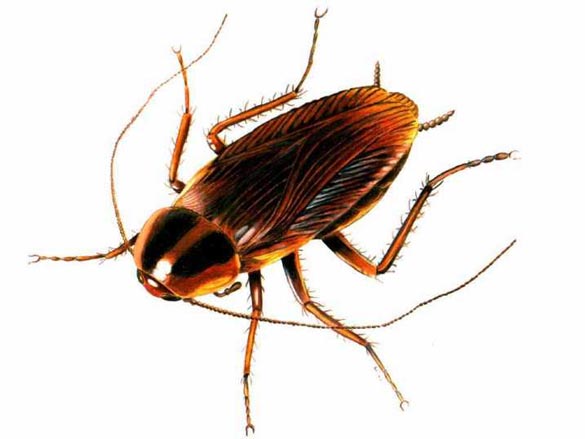
An ugly bug, with which you can make juice

Hyphenated adjectives work the same way. When you hyphenate two words, you essentially turn them into one word. For example, the phrase ugly bug juice could mean juice from ugly bugs or bug juice that is ugly. If you sprinkle in some of Hyphen’s charm, he can solve that ambiguity: ugly-bug juice is juice from unfortunate-looking bugs and ugly bug-juice is bug juice that happens to be unpleasant to see. So if you have two adjectives in front of a noun, determine whether you’ve laid an ambiguity trap. If you have, use Hyphen to build a bridge over it.

Meet Em Dash

Papa Em Dash is probably the punctuation mark most people get right—fact of the matter is that he’s hard to use wrong. Em Dash stands for an abrupt change in thought, in place of parentheses, in place of omitted letters in a name, for a cut-off statement, and sometimes even in place of quotation marks (though I don’t recommend it).

The problem is that Em Dash is so big (the width of an M in whatever font you’re using) that he draws a lot of attention to himself. So it’s best to limit your use of him. Use him when you need an interruption in your sentence—be that for pacing purposes or for a change in topic—and for very little else. If you use him sparingly, he’ll be more effective.

To get a true en dash in MS Word on a PC, hit CTRL + ALT + the minus key on your keyboard’s number pad (the hyphen key next to the zero is not the same). If you’re writing online, the HTML code for Em Dash is —. Stick the ampersand, mdash, and the semi-colon in your HTML code and you’re good to go.

Meet En Dash

En Dash is probably the least-known and least-understood member of the Hyphen-Dash family. But she can really communicate a lot for a line that is only the width of an N.
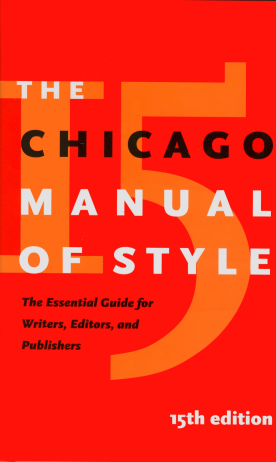
An Orange BOB

According to the Chicago Manual of Style (I call it BOB, for Bright Orange Bible, even if they did put a blue dust jacket on the latest edition), En Dash can stand in for to, signify an unfinished number range, assist with compound adjectives, and a few other assorted uses. It’s easiest to understand this through examples.

Standing for to. 2003–2010 means the years from 2003 TO 2010, whereas 2003-2010 could mean the same thing (incorrectly), or it could mean a file number that includes the numbers 2,003 and 2,010. This use can also appear outside of numbers. You can have a Cardiff–London train, for example, and author–editor interaction (which involves an author and an editor, whereas author-editor interaction is the interaction of one individual, an author-editor).

An unfinished range. 1993– would probably mean the life span of someone who hasn’t died yet. Hyphen is too small to really stand for a continuing life; instead it would seem like he was misplaced on accident. En Dash looks a lot more intentional.

In compound adjectives. Using En Dash with complicated adjectives is the most fun, and it’s also where she’s most important. En Dash connects adjectives made up of multi-word phrases or words that are already hyphenated. Observe: post-World War II years compared to post–World War II years (the first means years after War #2 after the end of the world, the second means after the second World War).

To use an en dash, in MS Word on a PC hit CTRL + the minus sign on your keypad. In HTML, use –.

The Takeaway

If you’re someone who has moaned about the limitations of the written word, but you haven’t taken a closer look at the punctuation options you have, stop moaning and start studying. There could be all sorts of nuances you’re missing out on.
Filed Under: Publishing Tagged With: copyediting, dashes, hyphens, punctuation, self-editing

Weekly Roundup: 9/24–9/30

September 30, 2011 by Kristy S. Gilbert 1 Comment

Gini Dietrich: Control Your Own Destiny

Gini is not in publishing, per se (though she is writing a book). Gini is in PR, and she’s also a business owner and she’s not keen on blaming your shortcomings on the “current climate.” While reading her article, the arguments she was refuting reminded me of common complaints about the publishing industry. She says, “Stop blaming the economy and start working twice as hard to build [y]our businesses”; I hear, “Stop blaming the industry and start working twice as hard on your writing.” Write great sentences; write great chapters; write great books. If you get a pile of rejection letters or your self-published novel tanks, don’t blame your circumstances. Brush yourself off and do it all again, only better. Books are you business. Don’t fall into this human flaw Gini points out: “We’re human beings. We like to have someone/something to blame when things don’t go our way. We’re inherently lazy. And we are always looking for shortcuts and the easy way out.”

(Reading Gini’s blog, Spin Sucks, can also be very informative when it comes to marketing, especially authentic marketing like that championed by a lot of publishing pros. I read it every day, and while I don’t always find something relevant to me, I find relevant posts often enough that I keep reading.)

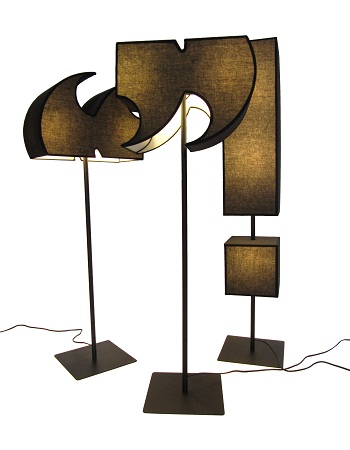
TABISSO Punctuation LampsTABISSO: Punctuation Lamps

I want one of these lamps. The closing quotation marks are beautiful, but depending on where it was going I might pick the colon instead, because I love colons. (By the way, last Saturday was National Punctuation Day, and I intended to entertain you with a lovely post about the dash family—hyphen, en dash, and em dash—but I was celebrating the first wedding anniversary I’ve spent in the same country as my husband, so I never wrote the post. I’ll write one for you later, because I believe they grant you amazing options for communication and nuance.)

Amazon: The Kindle Fire & Cheaper Kindle Models

You’ve probably already heard about Amazon’s Kindle Fire, the $199 color tablet that was announced this week. My thoughts? If I’m getting an ereader, I want e-ink. I personally don’t like backlighting at all. If I’m going to get a tablet, I would probably go with something other than the Kindle Fire. Currently it appears that Amazon is trying to exert the kind of control over its appstore that Apple has over iTunes, but their submission process has been complicated, flawed, and unhelpful for the app company I work for. Apps get rejected before they’re reviewed and then the company gets reminders to resubmit the app—even though the app is already resubmitted. The system needs ironing out before the Kindle Fire can have the same ecosystem as other tablets.

GalleyCat: Kindle Ebook Errors in Neal Stephenson’s REAMDE

This week Neal Stephenson’s new novel, REAMDE, was released with egregious errors in the Kindle version. From what I’ve heard described, it sounds like the file was probably converted straight from PDF and not proofread afterwards. If publishers are charging a premium on their ebooks, like the price they were asking for a brand-new Stephenson book, the ebooks need to be as pristine as print. That said, if you’re a reader who’s getting pristine ebooks, realize that the publishing house probably put extra work into proofing them in multiple formats (.epub, .mobi, etc.), and don’t squawk too much about the price being the same as the print version, because re-proofing those books is probably worth much more than the $2 is costs to print a hardcover.

Amazon has since mysteriously replaced the copies of the book that had been downloaded, once again proving that if your library is on a Kindle, Amazon has control of it. (Admittedly, it was sort of an opt-in system this time, though cryptic, but Amazon has a habit of doing things that control or obsessively track your use of the things they sell you. Case in point: All your web browsing on the Kindle Fire is tracked, and you can’t opt out.)

Shawn Coyne: Acquisitions P&Ls

Editor Shawn Coyne shares an inside look at acquisitions profit and loss statements (P&Ls). He talks about how to pitch in a way that makes money sense (not just story sense) and gives those who don’t work in a publishing house an inside look at how a manuscript goes from a well liked submission to a book with a contract offer.

Writing Excuses: Writing Assistants

This week the Writing Excuses crew talks to Peter Ahlstrom and Valerie Dowbenko, writing assistants to Brandon Sanderson and Patrick Rothfuss, respectively. They all talk about why hiring a writing assistant helps authors manage their ideas, keep up with deadlines, and accomplish assorted writing-related (but non-writing) tasks. In short, they talk about how writing assistants and other hired help give you more time to just write.

Orbit: Spring-Summer 2021 Covers

Orbit put up a blog post with its covers for the 2012 Spring-Summer catalog. Sometimes Orbit’s covers really delight me (I still practically cackle whenever I see Feed by Mira Grant), but sometimes they don’t quite hit the spot for me. (For example, although Brent Weeks’s Night Angel trilogy has good covers, they are also strikingly similar to Karen Miller’s mage series. The branding for the two has too much crossover for my taste.) Which are your favorite covers in the upcoming catalog?

Filed Under: Publishing Tagged With: acquisitions, Amazon, Brandon Sanderson, Brent Weeks, business of writing, cover design, covers, finances, Gini Dietrich, hired help, home decor, Karen Miller, Kindle, Kindle Fire, Night Angel trilogy, Orbit, P&Ls, Patrick Rothfuss, Peter Ahlstrom, punctuation, Shawn Coyne, Valerie Dowbenko, weekly roundup, writing assistants, Writing Excuses

Primary Sidebar

Hire Looseleaf

· Reserve a Fiction Manuscript Evaluation
· Other Editing Services
· Design Services
· Contact Looseleaf

Testimonials

She really made my book shine by offering insightful and helpful feedback and catching more inconsistencies than I could have ever managed on my own.
Madison Custudio, contemporary romantic fantasy author
Kristy’s talents and hard work on the book’s layout and design can be seen on every page.
Brandon Sanderson, NYT bestselling fantasy author
Kristy does a fantastic job every time. She’s punctual, thorough, affordable, and great to work with.
Brian McClellan, fantasy author
Kristy took me through the formatting process with ease and assurance. I quickly trusted her and her opinions and knew that the end result would be a quality product. … She is talented, creative and professional in all aspects of her services.
Cynthia Anderson, nonfiction author
Kristy is a joy and a pleasure to work with. She works quickly and efficiently with steep deadlines, and has an eye for detail that has helped me tremendously. … I highly recommend her.
Charlie N. Holmberg, Wall Street Journal bestselling author
Through several iterations of my manuscript, Kristy has been relentless in showing me where pieces were in the wrong place, were starved for elaboration, or belonged in an entirely different puzzle. … I don’t want to imagine what my project would look like without her.
Ron Felt, literary fiction writer
I have used Looseleaf for a number of projects, and have always been incredibly pleased by their speed, quality, and professionalism. … Phenomenal work, and I’ll definitely continue to use them for every project I can.
Dan Wells, New York Times bestseller

Newsletter signup

Please wait...

Thank you!

Footer

About Us

Looseleaf Editorial & Production was founded in 2011 with one goal: to help authors and publishers get their books ready for readers.

We specialize in top-notch editing and reader-focused design to help your story shine.

Let us help you next!

Contact Us

Our Work

This One’s For You by Kate Sweeney

This One’s For You by Kate Sweeney

Empire & Oracle

Empire & Oracle

Neom by Lavie Tidhar

Neom by Lavie Tidhar

Recent Articles

New Content Disclosures Policy

April 29, 2022 By Kristy S. Gilbert

Meet the Looseleaf team: an image with three headshots in it.

Looseleaf Is Growing!

March 15, 2022 By Kristy S. Gilbert

LTUE 2022 Schedule

January 10, 2022 By Kristy S. Gilbert Leave a Comment

Copyright © 2026 · Looseleaf Editorial & Production · Log in