• Skip to main content
  • Skip to primary sidebar
  • Skip to footer

Looseleaf Editorial & Production

Book Editing & Design

  • Editing
    • Big-Picture Editing
    • Line Editing
    • Copyediting & Proofreading
  • Book Design
    • Book Layout
    • Ebook Formatting
    • Other Graphic Design
  • About
    • The Team
    • Our Work
    • Find Your Fit
    • Testimonials
  • Resources
    • Resources
    • Events
  • Blog
  • Contact

weekly roundup

Double Roundup: 2/5–3/9

March 9, 2012 by Kristy S. Gilbert Leave a Comment

Catherynne Valente: Work Is Never Over: On Publishing and Its Many Faces

I posted a review of some of Valente’s work earlier this week, but I also found some of her blog posts well worth the read. Valente’s opinion on the “divide” and “revolution” in publishing these days is especially worthwhile because she’s done a lot both ways. She sells most of her work through traditional publishers, but her novel The Girl Who Circumnavigated Fairyland was the first novel to win the Andre Norton award without being traditionally published (although it is now available traditionally). In this article she talks about how the work of publishing is never over, regardless of your path, because art is never easy. Her links to previous posts are also worth your time.

Natalie Whipple: 10 Things I Wish I Would Have Done Differently

Author Natalie Whipple shares her list of what she wishes she could have told her earlier self. In many ways this short article is a perfect companion to Valente’s: Whipple essentially wishes she would have focused more on art and craft than business, and Valente is saying all the business sense in the world won’t make the art any easier.

In keeping with the theme of these two posts, I’m not going to post any more industry news from the past two weeks (there’s plenty out there: lawsuits and investigations and new releases, oh my!). Instead, I encourage you to pick up your writing and instead of thinking about how you’re going to sell it, market it, and pitch it to readers or publishers, just think about how to make it beautiful. I’ll be back with more industry stuff in a week or so.

Filed Under: Publishing Tagged With: art of writing, business of writing, Catherynne M. Valente, Natalie Whipple, weekly roundup

Weekly Roundup: 12/10–12/17

December 16, 2011 by Kristy S. Gilbert Leave a Comment

BusinessWeek.com: Publishers Are Still Missing the Boat on E-book Pricing

Mathew Ingram argues that publishers are shooting themselves in the foot with their ebook prices. He makes some strong points, and I’d agree with him that charging more for an ebook than a paperback is a mistake (even if it makes number sense publisher-side). However, as more of the market transitions to electronic, ebooks will be less of an afterthought and their prices will need to carry the costs of editorial and marketing, costs that have stayed more or less static in recent years and have, for some time, been carried by print sales. So I think pricing is a bit of a sticky issue.

Women Fighters in Reasonable Armor

This isn’t something new, like most roundup items are. This Tumblr account has been around for some time, but if you haven’t looked into it yet and you write anything that puts women in armor, you should check it out. It presents exactly what you’d expect: women fighters in reasonable armor. For some thoughts on the issue of reasonable armor with character, you can also visit armorer’s opinion post about reasonable armor in fantasy art (heads up: the examples of unreasonable armor he gives are especially tasteless; good examples, but they weren’t particularly pleasant to see).

ePub: The Language of eBooks—A Primer

If you have experience with HTML, CSS, and other markup languages and you aren’t yet sure how this whole ePub format thing works, this is a great resource for getting started. If you know nothing at all about HTML or CSS, this might not make any sense at all.

Brilliant Book Trailer

Most writers hate self-promotion. Here’s one author who does a very good job of promoting his book without making you feel like he’s being a salesman. (His book is due to release 1/3/2012, it’s called Everything You Need to Survive the Apocalypse, and his last name is Klauss. I remember that off the top of my head after seeing this once, and that’s all the information I need to get his book. That’s how well he did.)

Filed Under: Publishing Tagged With: armor, book trailer, BusinessWeek, ebooks, ePub, Everything You Need to Survive the Apocalypse, Lucas Klauss, Mathew Ingram, pricing, weekly roundup, women

Weekly Roundup: 10/8–10/14

October 14, 2011 by Kristy S. Gilbert Leave a Comment

Kern Type ScreenshotKern Type: A Kerning Game

This may not appeal to many book people, but type nerds will appreciate this kerning game from Method of Action. From the game instructions: “Your mission is simple: achieve pleasant and readable text by distributing the space between letters. Typographers call this activity kerning. Your solution will be compared to [a] typographer’s solution, and you will be given a score depending on how close you nailed it. Good luck!”

Tony D’Souza: When to Stop Working on Your Book

Novelist Tony D’Souza describes all the work and years he put into his manuscript Voyage of the Rosa … and then explains how he let it go and started something else. Letting a book die is something many writers have a problem with. Having an objective eye to help you know when to let something lie is a huge benefit. Indie publishing means anything can be published, but not everything you write is something you should sell. D’Souza explains how his masterpiece became a monster; maybe his story can help you avoid similar pitfalls.

Amazon: Amazon Launches a New Imprint

Amazon is launching a new science fiction, fantasy, and horror imprint called 47North, and has announced the first run of titles.

Rose Fox: Someone at Amazon Launches a Speculative Fiction Imprint

In light of the 47North announcement, Rose Fox expresses concern that nobody seems to have stepped forward to claim the imprint from an editorial standpoint. She raises questions over whether or not the editorial side has much genre experience. She sounds a bit hostile (and she admits that she is), but she raises some good points regardless.

Stacy Whitman: FAQ: Muslim Protagonist

Editor Stacy Whitman of Tu Books answers a question from one of the writers submitting to her. The writer wonders if a Muslim protagonist isn’t relatable enough for a widespread audience. This writer really shouldn’t fear: he or she is submitting to Tu Books, which has the great goal of adding diversity into YA and middle grade science fiction and fantasy. In Stacy’s words: “When we say ‘about everyone, for everyone,’ we mean everyone. Except maybe Sauron.” In her post, Stacy focuses on what makes a character more or less relatable. Especially when you’re dealing with speculative fiction, that doesn’t mean your reader shares a background with the character.

Carolyn McCray: “Price Pulsing”

Over at Digital Book World, Carolyn McCray gives some Amazon-sales advice in her article, “‘Price Pulsing’: the Benefits of Dynamic Pricing on Amazon.” She describes a method of temporarily lowering your price for promotional purposes to boost you in the Amazon rankings before you put your book back at retail price. It’s essentially a sale, but McCray explains the strategy behind the sale.

Filed Under: Publishing Tagged With: 47North, Amazon, business of writing, Carolyn McCray, diversity, fantasy, horror, Kern Type, kerning, Muslim, pricing, Rose Fox, science fiction, speculative fiction, Stacy Whitman, Tony D'Souza, Tu Books, typography, weekly roundup, writing advice

Weekly Roundup: 10/1–10/7

October 7, 2011 by Kristy S. Gilbert Leave a Comment

Writing Excuses: Hollywood Formula

This week’s episode of Writing Excuses is a gem. Lou Anders, from Pyr joins the regular crew to talk about the Hollywood formula, which centers around three main characters and their relationships. Lou says the formula is a method many screenwriters use to ensure they’re getting the best emotional effect possible from their story’s climax. It’s well worth the listen, I assure you.

Roz Morris: Four tips for writing good prose

Writer Roz Morris gives four great tips on getting your prose right. I especially like her second tip, “Develop an ear.” I’ve edited for writers who have excellent vocabularies and clear ideas, but the sentences they write are like poorly paved roads. Your readers needs to be able to glide through your words, hit the beats you need them to hit, and continue through your story.

Emily Books: An Indi(e) Bookstore

Emily Books is a new indie bookstore that sells a subscription to 12 ebooks a year (the owners hope to sell a larger variety later, but will always keep the subscription model). They embrace ebooks, and they say, “We want there to be a million stores like Emily Books, with dedicated booksellers—not algorithms—deciding which books to recommend. When a monolith is in charge of selecting which books readers get to hear about, everyone loses. We think independent bookselling is good for publishers, authors, and readers!” It’s an interesting idea in the realm of content curation. Not sure Emily Books would be the bookstore for me, but it would be interesting to see more curator-style stores popping up.

Lou Anders: The Tangled Webs We Weave

Lou Anders makes his second appearance in this week’s roundup with his essay “The Tangled Webs We Weave.” The essay will only be available online for a limited time, but it appears in Webslinger: SF and Comic Writers on Your Friendly Neighborhood Spider-Man, which is edited by Gerry Conway. Lou aims his essay at how science is becoming less sexy in our culture, and how media both reflects and contributes to that change.

John Scalzi: Writer Beware and “The Write Agenda”

Author and SFWA president John Scalzi discusses a new group called The Write Agenda. This group is determined to discredit resources aspiring authors have used for years to keep tabs on industry scammers. TWA seems to make hefty use of boycott lists and one-star reviews on books written by authors they don’t agree with. Leaving one-star reviews for anything other than the contents of the book is a ridiculous practice regardless. Read Scalzi’s write up and be cautious.

Filed Under: Publishing Tagged With: Emily Books, indie bookstores, Lou Anders, prose, Pyr, Roz Morris, weekly roundup, writing advice, Writing Excuses

Weekly Roundup: 9/24–9/30

September 30, 2011 by Kristy S. Gilbert 1 Comment

Gini Dietrich: Control Your Own Destiny

Gini is not in publishing, per se (though she is writing a book). Gini is in PR, and she’s also a business owner and she’s not keen on blaming your shortcomings on the “current climate.” While reading her article, the arguments she was refuting reminded me of common complaints about the publishing industry. She says, “Stop blaming the economy and start working twice as hard to build [y]our businesses”; I hear, “Stop blaming the industry and start working twice as hard on your writing.” Write great sentences; write great chapters; write great books. If you get a pile of rejection letters or your self-published novel tanks, don’t blame your circumstances. Brush yourself off and do it all again, only better. Books are you business. Don’t fall into this human flaw Gini points out: “We’re human beings. We like to have someone/something to blame when things don’t go our way. We’re inherently lazy. And we are always looking for shortcuts and the easy way out.”

(Reading Gini’s blog, Spin Sucks, can also be very informative when it comes to marketing, especially authentic marketing like that championed by a lot of publishing pros. I read it every day, and while I don’t always find something relevant to me, I find relevant posts often enough that I keep reading.)

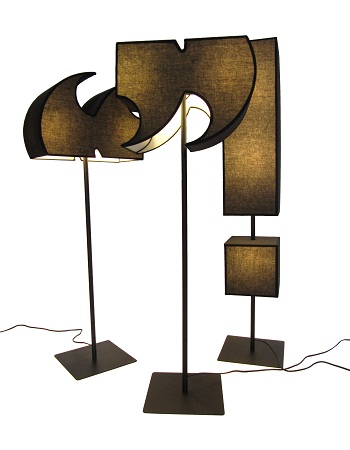
TABISSO Punctuation LampsTABISSO: Punctuation Lamps

I want one of these lamps. The closing quotation marks are beautiful, but depending on where it was going I might pick the colon instead, because I love colons. (By the way, last Saturday was National Punctuation Day, and I intended to entertain you with a lovely post about the dash family—hyphen, en dash, and em dash—but I was celebrating the first wedding anniversary I’ve spent in the same country as my husband, so I never wrote the post. I’ll write one for you later, because I believe they grant you amazing options for communication and nuance.)

Amazon: The Kindle Fire & Cheaper Kindle Models

You’ve probably already heard about Amazon’s Kindle Fire, the $199 color tablet that was announced this week. My thoughts? If I’m getting an ereader, I want e-ink. I personally don’t like backlighting at all. If I’m going to get a tablet, I would probably go with something other than the Kindle Fire. Currently it appears that Amazon is trying to exert the kind of control over its appstore that Apple has over iTunes, but their submission process has been complicated, flawed, and unhelpful for the app company I work for. Apps get rejected before they’re reviewed and then the company gets reminders to resubmit the app—even though the app is already resubmitted. The system needs ironing out before the Kindle Fire can have the same ecosystem as other tablets.

GalleyCat: Kindle Ebook Errors in Neal Stephenson’s REAMDE

This week Neal Stephenson’s new novel, REAMDE, was released with egregious errors in the Kindle version. From what I’ve heard described, it sounds like the file was probably converted straight from PDF and not proofread afterwards. If publishers are charging a premium on their ebooks, like the price they were asking for a brand-new Stephenson book, the ebooks need to be as pristine as print. That said, if you’re a reader who’s getting pristine ebooks, realize that the publishing house probably put extra work into proofing them in multiple formats (.epub, .mobi, etc.), and don’t squawk too much about the price being the same as the print version, because re-proofing those books is probably worth much more than the $2 is costs to print a hardcover.

Amazon has since mysteriously replaced the copies of the book that had been downloaded, once again proving that if your library is on a Kindle, Amazon has control of it. (Admittedly, it was sort of an opt-in system this time, though cryptic, but Amazon has a habit of doing things that control or obsessively track your use of the things they sell you. Case in point: All your web browsing on the Kindle Fire is tracked, and you can’t opt out.)

Shawn Coyne: Acquisitions P&Ls

Editor Shawn Coyne shares an inside look at acquisitions profit and loss statements (P&Ls). He talks about how to pitch in a way that makes money sense (not just story sense) and gives those who don’t work in a publishing house an inside look at how a manuscript goes from a well liked submission to a book with a contract offer.

Writing Excuses: Writing Assistants

This week the Writing Excuses crew talks to Peter Ahlstrom and Valerie Dowbenko, writing assistants to Brandon Sanderson and Patrick Rothfuss, respectively. They all talk about why hiring a writing assistant helps authors manage their ideas, keep up with deadlines, and accomplish assorted writing-related (but non-writing) tasks. In short, they talk about how writing assistants and other hired help give you more time to just write.

Orbit: Spring-Summer 2021 Covers

Orbit put up a blog post with its covers for the 2012 Spring-Summer catalog. Sometimes Orbit’s covers really delight me (I still practically cackle whenever I see Feed by Mira Grant), but sometimes they don’t quite hit the spot for me. (For example, although Brent Weeks’s Night Angel trilogy has good covers, they are also strikingly similar to Karen Miller’s mage series. The branding for the two has too much crossover for my taste.) Which are your favorite covers in the upcoming catalog?

Filed Under: Publishing Tagged With: acquisitions, Amazon, Brandon Sanderson, Brent Weeks, business of writing, cover design, covers, finances, Gini Dietrich, hired help, home decor, Karen Miller, Kindle, Kindle Fire, Night Angel trilogy, Orbit, P&Ls, Patrick Rothfuss, Peter Ahlstrom, punctuation, Shawn Coyne, Valerie Dowbenko, weekly roundup, writing assistants, Writing Excuses

Weekly Roundup: 9/17–9/23

September 23, 2011 by Kristy S. Gilbert Leave a Comment

Seanan McGuire: Across the digital divide.

Author Seanan McGuire wrote a post that takes a different look at the e-revolution in publishing than I’ve heard before: she looks at how it makes reading an exclusionary luxury. I’ve thought about this sort of thing before myself. (Probably because ever since I moved out of my parents’ home I’ve been a few steps behind every technological advance—except in the case of required professional software like Adobe Creative Suite products and Word.)

In response to the argument that even those who don’t have an e-reader have a computer (something I have heard), I know people who can’t afford to have a home computer either. Those people would have to rely on places with free computers, like libraries, but library computers aren’t the sort you can sit at for hours and hours because they’re in high demand (not to mention the decrease in library funding). The issue of making electronic reading as democratic as print reading is one that hasn’t been satisfactorily addressed for me. The ease of moving a print book from one owner to another is one reason I’ve been happy to keep buying print books even though I have an e-reader.

Thomas Baekdal: Infinite Choices and a World Abundance vs. Supply and Demand.

Thomas Baekdal explains why supply-and-demand rules do not apply to the abundance of ebooks. This is a follow-up to his article called “The Myth of the 99 Cent Book.” In both articles he emphasizes why 99 cents is not a sustainable price for books to trend toward and why it’s a bad way to go. He suggests that you stop focusing on making your book cheap enough that people won’t fight about having to give you money; instead, make your content into someone of sufficient quality that people will be clambering to give you a fair price.

Baekdal’s reasoning is why I’m so happy with publishers and authors who are dedicated to making their ebooks into quality products instead of subsidiary aftereffects (Pyr, for example). When you put out a quality story and you present it in a quality way, with attention to detail and quality, you can maintain a sustainable price point and readers will pay it willingly because they know it’s worth the money.

Writers Beware: PUBSLUSH Press

There have been a lot of crowdfunding projects cropping up across the internet, and one of the newest is PUBSLUSH Press (they’re technically still in beta). Writers Beware posted a critique of PS’s publishing agreement and noted some things to be aware of. These crowdfunding organizations are another option and venue for writers, but it’s best to go into anything—from traditional publishing to doing everything yourself—with your eyes wide open to the opportunities, risks, and sticky bits. PUBSLUSH has quite a few sticky bits.

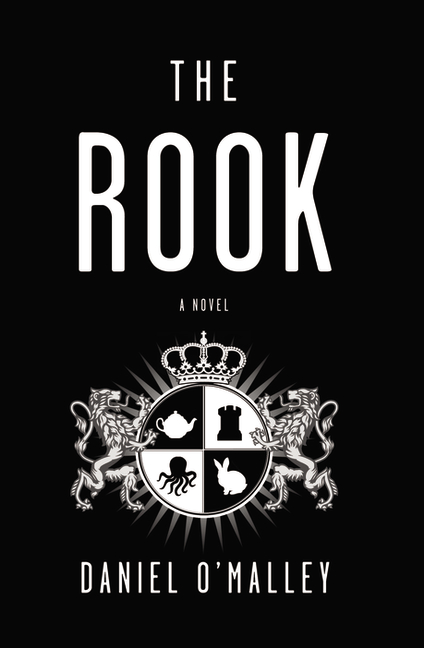
The Rook by Daniel O'MalleyDaniel O’Malley: Chapters 1 & 2 of The Rook

The Rook is a book that piqued my interest at some point in the past, though I’m not quite sure when or where. (I may have heard about it through Publishers Weekly, but I’m not sure because I don’t record where I find things when I put them on my “to watch” list.) There is a two-chapter teaser for the fantasy novel available now. Yes, I’ve read the teaser. After I read it I was tempted to pre-order the novel (which doesn’t come out until January 2012). I haven’t because my birthday and Christmas happen between now and its release, and I tend to get wonderful gift cards to bookish places on one (or both) of those occasions. That and I still haven’t finished the stack of books next to my desk and I’ve cut off my book spending until it’s been devoured. And The Hum and the Shiver comes out next week, and that’s another book I’ve been watching.

Filed Under: Publishing Tagged With: Alex Bledsoe, Daniel O'Malley, ebooks, epublishing, pricing, PUBSLUSH Press, Seanan McGuire, The Hum and the Shiver, The Rook, Thomas Baekdal, weekly roundup, Writers Beware

Weekly Roundup: 9/10–9/16

September 16, 2011 by Kristy S. Gilbert Leave a Comment

Lil’ Ol’ Me: Working with an Editor

Since you just don’t get enough of me from my own blog, I’m linking you to a guest post I wrote for Charlie Holmberg’s blog. It’s called “Working with an Editor” and I’ll give you one chance to guess what it’s about. Charlie is a good friend, and she comes up with delightfully different ideas for her stories.

Daniel Nayeri: Editing Books for Girls (When You’re a Boy)

1981 Lego AdThis is technically from last week, but I found it this week so it still counts, right? In this blog post editor/author Daniel Nayeri talks about his views on books for girls. The way he uses a Lego ad to describe the target audience he feels is being neglected is awesome. And I think he addresses an issue we have in fiction (markedly, I believe, in genre fiction). If a woman is feminine she’s weak, and if she’s strong it’s only because she has become so masculine. There are some books that break that mold, and I love them. Finding more of them would not stop me loving them either, so I’m on the hunt as much as Nayeri is.

Publishers Weekly: Now Accepting e-Galleys for Review

For romance and science-fiction/fantasy/horror titles, Publishers Weekly is no longer requiring physical galleys for reviews. You can now submit electronically on their website. They prefer ePub format (no surprise there), though they’ll accept .mobi and RTF as well. I’m not sure how they would react to a book submitted from an indie author, but the worst they can do is trash it, right? They don’t have anything specific mentioned in the instructions regarding indie authors, so I don’t think it would be a big issue.

Alan Rinzler: What authors can learn from the bestseller lists

Developmental editor Alan Rinzler looks and what it takes to get on the New York Times Bestseller List, mostly by pointing out that conventional wisdom does not apply, and that wonderful writing and wonderful stories will always find a way to the top.

Publishers Lunch: Successful Self-Publishers Get Deals

I’ve heard people say that there’s a stigma against self-publishers that makes traditional vs. self-publishing an editor-or decision. I’d like to present some evidence to the contrary that I found in this week’s Publishers Lunch.

Author of No. 1 Kindle bestseller A LITTLE DEATH IN DIXIE, said to have sold over 250,000 units on Amazon, Lisa Turner’s two untitled Southern mysteries, to Tessa Woodward at Harper, in a very nice deal, by Robert Gottlieb at Trident Media Group (world).

Eric Kahn Gale’s debut THE BULLY BOOK, originally a self-published ebook that hit #1 on Amazon on the children’s mystery list and #7 on the children’s book list, about a boy who is just an average kid until he becomes the class grunt; he suspects a bizarre conspiracy and is determined to solve the mystery, to Phoebe Yeh at Harper Children’s, in a pre-empt, in a two-book deal, by Erica Rand Silverman at Sterling Lord Literistic (NA).

One person went from self-publishing to sell her next two books; the other is selling the North American rights to a book he’s already put out. If you reach readers, you can publish either way. It’s not an either-or choice. You do what’s best for your books and your goals.

Jon Yang: The Game of Publishing

This is hilarious. Go read it now. Because I said so.

Filed Under: Publishing Tagged With: Alan Rinzler, bestsellers, Daniel Nayeri, gender, indie publishing, Publishers Weekly, self-publishing, traditional publishing, weekly roundup, writing advice

Weekly Roundup: 9/3–9/9

September 9, 2011 by Kristy S. Gilbert Leave a Comment

Cory Doctorow: “Why Should Anyone Care?”

Cory Doctorow shares his thoughts about working at a bookstore and how that opened his eyes to how the book-producing industry chugs through the years. He also provides some practical thoughts on self-publishing based on his own experience. My favorite quote: “I knew I’d have to do some of the stuff my publisher had done, but like everyone doing something complicated for the first time, I dramatically underestimated how much work this would be. ”

Stacy Whitman: “Some Thoughts on Middle Grade Voice”

The editorial director of Tu Books shares her thoughts on voice in general and the middle grade voice in particular (I thought this article would follow up last week’s Wordplay podcast quite well). She focuses on how hard humor is, and why it’s really bad if your writing displays the difficulty of your undertaking.

Nathan Bransford: “Publishers Are Squandering Their Cachet On Imprints”

Nathan Bransford presents a post about how publishers lend credibility to authors associated with their brand name—and why that credibility may be squandered on lesser-known imprints and specialty groups. (I’d like to comment more on this, but I recognize more imprints than most people should, so I can’t really say which imprints are actually adding brand-name power to a book.)

Wordplay Podcast Episode 2: “Character, Plot, & Protagonists”

This week the Wordplay team has Ally Condie, the author of Matched, as a guest on episode 2.They talk about the difference between character-driven and plot-driven fiction, and why you need a balance between the two. They also harangue the idea of a paper cutout villain who doesn’t have believable motives or a certain degree of emotional complexity.

Writing Excuses 6.14: “Suspension of Disbelief”

The Writing Excuses crew has Patrick Rothfuss joining them for a podcast about suspending your reader’s disbelief. Some highlights: don’t make everything too tidy, don’t betray human nature, lay your groundwork, and make use of the slow build to absurdity. Rothfuss also highlights the concept of bathos, which boils down to undercutting serious or weighty things with commonplace events or thoughts.

Jon Schindehette: “Is Illustration a Viable and Productive Art Form?”

Illustration is the art of books, from two-page illustrated spreads to covers. In this post Jon Schindehette (creative director at Wizards of the Coast) briefly looks at illustration as an art form from an artist’s standpoint. He also addresses the viewpoint of an art director or editor. “[Art directors and editors] are responsible for ensure [sic] the artist that is chosen is appropriate for the task at hand, but they are also responsible for communicating the ‘needs of the text’ so that you [the illustrator] understand what success will look like.” If you’re an author looking into being your own publisher, you should also start thinking about what it takes to be your own art director as well.

Kristin Nelson: “In The Author’s Shoes”

Agent Kristin Nelson shares a conversation she had with an author who has recently changed agents. The author pointed out three things every author should be sure of before signing with an agent. Kristin adds her thoughts on each point. These points serve as a reminder that the author–agent relationship should be a partnership, and you should approach it as such. If you can’t ensure they’ll be a good business partner, you shouldn’t be signing with them.

Filed Under: Publishing Tagged With: Ally Condie, Brandon Sanderson, Cory Doctorow, Dan Wells, epublishing, fiction, Howard Tayler, J. Scott Savage, James Dashner, Mary Robinette Kowal, middle grade, Nathan Bransford, Patrick Rothfuss, weekly roundup, Wordplay, Writing Excuses, young adult

  • Go to page 1
  • Go to page 2
  • Go to Next Page »

Primary Sidebar

Hire Looseleaf

· Reserve a Fiction Manuscript Evaluation
· Other Editing Services
· Design Services
· Contact Looseleaf

Testimonials

Kristy is a joy and a pleasure to work with. She works quickly and efficiently with steep deadlines, and has an eye for detail that has helped me tremendously. … I highly recommend her.
Charlie N. Holmberg, Wall Street Journal bestselling author
She really made my book shine by offering insightful and helpful feedback and catching more inconsistencies than I could have ever managed on my own.
Madison Custudio, contemporary romantic fantasy author
Kristy took me through the formatting process with ease and assurance. I quickly trusted her and her opinions and knew that the end result would be a quality product. … She is talented, creative and professional in all aspects of her services.
Cynthia Anderson, nonfiction author
Kristy does a fantastic job every time. She’s punctual, thorough, affordable, and great to work with.
Brian McClellan, fantasy author
I have used Looseleaf for a number of projects, and have always been incredibly pleased by their speed, quality, and professionalism. … Phenomenal work, and I’ll definitely continue to use them for every project I can.
Dan Wells, New York Times bestseller
Kristy’s talents and hard work on the book’s layout and design can be seen on every page.
Brandon Sanderson, NYT bestselling fantasy author
Through several iterations of my manuscript, Kristy has been relentless in showing me where pieces were in the wrong place, were starved for elaboration, or belonged in an entirely different puzzle. … I don’t want to imagine what my project would look like without her.
Ron Felt, literary fiction writer

Newsletter signup

Please wait...

Thank you!

Footer

About Us

Looseleaf Editorial & Production was founded in 2011 with one goal: to help authors and publishers get their books ready for readers.

We specialize in top-notch editing and reader-focused design to help your story shine.

Let us help you next!

Contact Us

Our Work

This One’s For You by Kate Sweeney

This One’s For You by Kate Sweeney

Empire & Oracle

Empire & Oracle

Neom by Lavie Tidhar

Neom by Lavie Tidhar

Recent Articles

New Content Disclosures Policy

April 29, 2022 By Kristy S. Gilbert

Meet the Looseleaf team: an image with three headshots in it.

Looseleaf Is Growing!

March 15, 2022 By Kristy S. Gilbert

LTUE 2022 Schedule

January 10, 2022 By Kristy S. Gilbert Leave a Comment

Copyright © 2026 · Looseleaf Editorial & Production · Log in