• Skip to main content
  • Skip to primary sidebar
  • Skip to footer

Looseleaf Editorial & Production

Book Editing & Design

  • Editing
    • Big-Picture Editing
    • Line Editing
    • Copyediting & Proofreading
  • Book Design
    • Book Layout
    • Ebook Formatting
    • Other Graphic Design
  • About
    • The Team
    • Our Work
    • Find Your Fit
    • Testimonials
  • Resources
    • Resources
    • Events
  • Blog
  • Contact

Publishing

New Webcomic: Children of Eldair by Rachel Oaks & Jemma Young

December 1, 2012 by Kristy S. Gilbert Leave a Comment

Koe LeKai was content to live his centuries-long life isolated in his cavernous home, but a strange sign in his stargazing lures him away from his solitude. Upon encountering a horde of monstrous flesh eaters, he eradicates them and saves a young woman, Embera, from being torn into scraps. While Embera is grateful for his help, she harbors a secret that Koe will only come to understand through time, magic, and the ever-guiding wisdom of the stars.
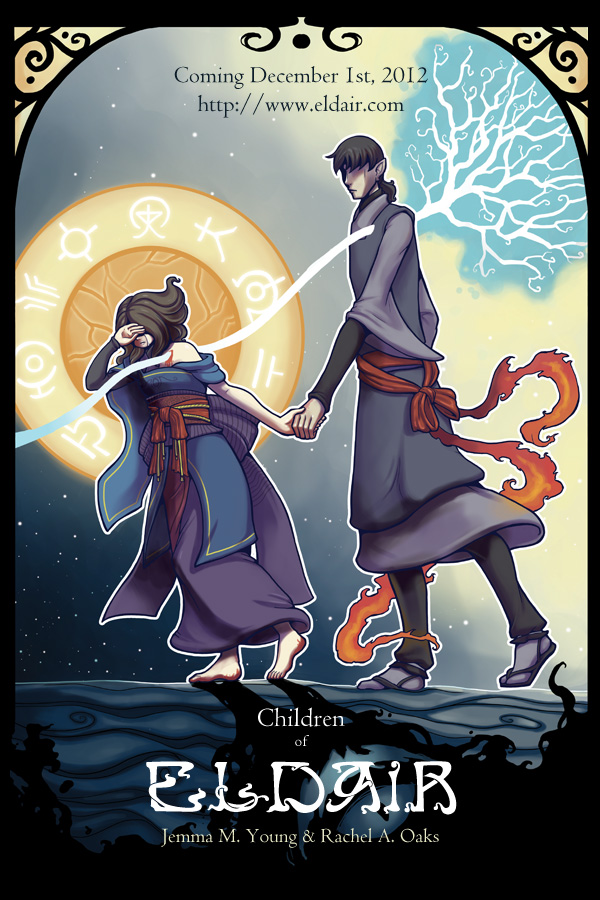
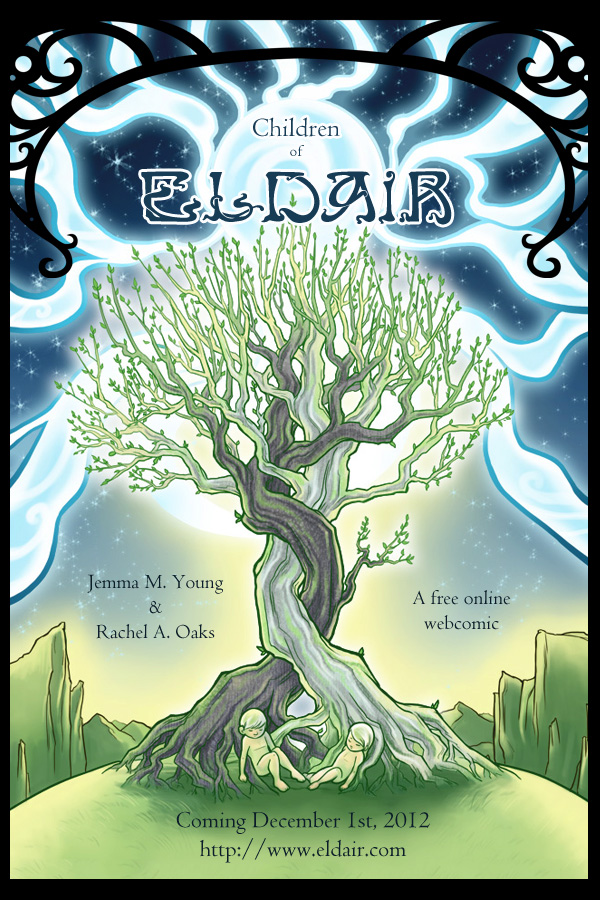
It’s time to announce a new webcomic from Rachel Oaks and Jemma Young. These two talented women are close friends of mine, and I’ve had the privilege of seeing this storyline (and the art that goes with it) go through various incarnations.

The comic goes live today, December 1, and I know for a fact that they have quite a buffer built up, so you’ll get regular updates of fantasy-comic goodness even if you start reading right now. To get started, just visit Eldair.com. The comic will update every weekday for the first chapter. After that updates will come every Monday and Thursday.

If you need more convincing, watch this video below. Rachel will compliment you into submission.
Filed Under: Publishing, Randomity Tagged With: book release, Children of Eldair, illustration, Jemma Young, Rachel Oaks, webcomic, YA, young adult

Announcing My First Book

October 10, 2012 by Kristy S. Gilbert 2 Comments

Spiced Sugar Cookie Truffles
Spiced sugar cookie truffles

I’m not exactly new to publishing, working with publishers, or working with materials that I know will be published. But my latest project does have me doing something new: instead of editing the work to be published, I’m helping to write it!

Right now I’m working on a joint project with children’s author Rick Walton to put together a Christmas book for Familius, a new press specializing in family-centered books and collections. The book is going to have short stories, poems, recipes, and activities for families to use during the Christmas season. The experience is, so far, a lot different than editing.

Writing Nonfiction

One aspect of the book that isn’t difficult for me to adjust to is writing nonfiction. I’m writing the recipes and many of the activities, but honestly, I haven’t written any fiction in a long time. Right now I blog, write summaries, and write research papers, so I’m used to a wide spread of nonfiction styles and voices. I haven’t ever written recipes before, but considering the fact that I used to be the kind of person who could get lost in even the simplest set of recipe directions, it isn’t too difficult to make sure my recipes make sense.

The tricky part of this, for me, is that instead of editing the text to align it with someone else’s idea of what the branding and voice of the book should be, I need to decide for myself and reflect that decision in my word choice, topic selection, and more.

Writing Christmas Nonfiction

The biggest problem I’ve had so far is the fact that I’ve been testing recipes for Christmas … in September and October. Among other things, I’ve made peppermint meringue cookies (difficult to do when you can’t find candy canes in the store), spiced sugar cookies (which aren’t too weird, because the spices I used are associated with fall as well as Christmas), and two types of hot chocolate. The temperature has been up in the 70s or higher lately, so convincing people to taste-test the hot chocolate was a bit of a challenge.

Book Release Details

I don’t have a publication date for the book yet, but it will be out as an ebook this Christmas season (if all goes well, hard copies will come out next year). I’ll keep you posted on the details as I get them.

Filed Under: Publishing Tagged With: book release, Christmas, Christopher Robbins, Familius, holiday book, nonfiction, Rick Walton

Pack Rat Perks: Why Keeping All Your Ideas Comes in Handy

June 18, 2012 by Kristy S. Gilbert 4 Comments

We all have a lot of ideas. Not all of them are good ideas, and many get junked. But for writers and other creative types, if you can find a way to squirrel away even your bad ideas, you can earn some serious benefits.

Analogy Time

Two young women playing water polo
I’m #4, with the white cap. I don’t know #7’s name, but I’m sure I made her life miserable during that game.

Permit me an analogy. I’m in the middle of my first pregnancy (the first trimester of morning sickness is why I fell off the grid for several months). I also desperately need to exercise, and I currently live in the middle of West Texas, so I’m doomed to day after day of temperatures above 100 degrees. A simple solution: go to the pool down the road and swim laps to my heart’s content. Unfortunately, that means finding a swim suit that accommodates my five-months-pregnant, penguin-like silhouette.

However, I swam all through high school, played water polo for four years, and lifeguarded and taught swim lessons all through college, so I’ve gone through my fair share of swim suits. Buying one I’ll only wear while pregnant is an expense that would irritate me. I’m also a bit of a pack rat, so I don’t think I’ve thrown away more than two of the suits I’ve owned since age 15. Most of the suits are either semi-translucent (or transparent) and/or have tears at the seams. But I’ve never been able to feel good about throwing a suit away, so I keep them stashed in a mesh bag in my closet.

Having all those less-than-ideal suits around has paid off: when I combine two or three semi-transparent and semi-worn-out suits, the result is one fully opaque suit that has room for my current belly. Chlorine, here I come!

Writing Application

The same principle applies to writing ideas. Even if one isolated idea can’t carry its own story or essay, that doesn’t mean it’s useless. Be a pack rat: Stash the idea in a writing notebook, type it up in a random note file on your computer, or even write it on a slip of paper and bury it in a Mason jar. If you can find a place to stash your ideas, even your bad ones, you can’t lose.

Worst-case Scenario: If the idea doesn’t ever pan out, you’ve still created a habit of recording your ideas and inspirations. That means that when you do have ideas that will pan out, you already have a system set up to capture them.

Best-case Scenario: You later realize that the idea wasn’t so bad after all, and if you tweak it just so, you can write something brilliant.

Middle-of-the-Road Scenario: If you put two or three less-than-complete ideas together, you could very well end up with something stellar and adaptable. Pieces of ideas are easier to adapt to new circumstances and requirements than complete, fully formed story or essay ideas (just as partially worn-out swim suits are better at accommodating huge body changes).

So come up with a notebook, file, or container for your ideas and start a being an idea pack rat. Even if that pack-rat system is just a mesh bag in your closet, you may be surprised at what you’re glad you held onto.

Filed Under: Publishing Tagged With: brainstorming, ideas, writing advice

How to Name a Hero, with Alex Bledsoe

April 2, 2012 by Kristy S. Gilbert 1 Comment

Author Alex Bledsoe

Today’s post comes to you from novelist Alex Bledsoe. He has been a reporter, editor, photographer, and door-to-door vacuum cleaner salesman. Today he’s the proud author of  the Eddie LaCrosse series, the Memphis Vampires series, and The Hum and the Shiver (the text of which I reviewed here, and the cover of which made my list of favorites for 2011). His website is AlexBledsoe.com.

A character’s name is one of the most important things the writer has to discover. The way a name sounds, the way it looks on the page, even the way it’s spelled can make the difference between forgettable and archetypal. Sometimes the name seems inevitable, while for other times, the character may go through a half-dozen before finding one that fits.

Ian Fleming took the name “James Bond” from the author of an ornithological guide lying around his Jamaican home, because he wanted a bland, forgettable name, one perfect for a spy. Indiana Jones (originally “Indiana Smith”) was named, not after the state, but after George Lucas’s dog. In both cases the names already existed in other contexts, but the writers recognized that they fit their fictional characters. The same thing recently happened to me: in my upcoming novel Wake of the Bloody Angel, I realized author Rhodi Hawk’s name perfectly suited a character. I changed the spelling, and of course asked if the real Rhodi would mind. Luckily for me, she was delighted.

Sometimes you can work with the wrong name for a long time without realizing it. Margaret Mitchell’s heroine was called “Pansy” until almost the last minute, when she changed it to “Scarlett.” Luke Skywalker was originally the far more martial “Luke Starkiller.” In my own case, my hero was named “Devaraux LaCrosse” for over a decade’s worth of unpublished drafts, until I was suddenly struck by the idea that he needed a normal, everyday name and he became “Eddie” for his debut, The Sword-Edged Blonde.

Many heroes have names that conform to a system. In Superman mythology the initials “L.L.” are far more prominent than they would be in real life: Lois Lane, Lana Lang, Lex Luthor, Linda Lee. I mean, really: what are the chances of one guy having two girlfriends, and an arch-enemy, with the same initials? The absolute master for naming within a system was undoubtedly J.R.R. Tolkein: for example, the people of Rohan are expert horsemen, and so their names (Eomer, Theoden, Eowyn) incorporate “Eo,” the Anglo-Saxon prefix for “horse.” In my novel Dark Jenny, the setting and many of the characters were based on Arthurian legend, so I sought names that evoked, even if only tangentially, their origins. Lancelot, for example, becomes Elliot Spears (lance, spear, get it?); Morgan becomes Megan; Guinevere becomes Jennifer, and so on. I kept a couple of names as-is, but used them as surnames with normal first names (“Bob” Kay and “Ted” Medraft).

And on occasion, the naming gods simply smile on you. The characters in The Hum and the Shiver were named with very little forethought, with the only criteria being that they had to have Celtic origins. But it turned out that the names fit the personalities better than I ever realized. The protagonist’s name, Bronwyn, means “dark and pure.” The impulsive youngest child is named Aiden, which means “fiery.”

But the real master for names, hands down, just celebrated his 200th birthday. Charles Dickens came up with names that both sounded great and conveyed their bearers’ personalities: Ebenezer Scrooge, Noddy Boffin, Bob Cratchit, David Copperfield, and Martin Chuzzlewit, to name just a handful of his best known.

There are as many approaches to naming as there are characters to name. I’m currently working on a novel that takes its basic plot dynamics from Shakespeare, which of course means I can raid lists of Shakespearean names. Another work in progress takes place in a particular geographic area, so it’s off to find out what family surnames are found in that area. One day, I might even create a character as archetypal as James Bond or Scarlett O’Hara. Heck, maybe I already have, and I just didn’t get the name right.

If you appreciated Alex’s post, be sure to pay his blog a visit.

Filed Under: Publishing Tagged With: Alex Bledsoe, character, Charles Dickens, George Lucas, Gone with the Wind, guest post, Ian Fleming, Indiana Jones, James Bond, Margaret Mitchell, names, naming, Wake of the Bloody Angel

Double Roundup: 2/5–3/9

March 9, 2012 by Kristy S. Gilbert Leave a Comment

Catherynne Valente: Work Is Never Over: On Publishing and Its Many Faces

I posted a review of some of Valente’s work earlier this week, but I also found some of her blog posts well worth the read. Valente’s opinion on the “divide” and “revolution” in publishing these days is especially worthwhile because she’s done a lot both ways. She sells most of her work through traditional publishers, but her novel The Girl Who Circumnavigated Fairyland was the first novel to win the Andre Norton award without being traditionally published (although it is now available traditionally). In this article she talks about how the work of publishing is never over, regardless of your path, because art is never easy. Her links to previous posts are also worth your time.

Natalie Whipple: 10 Things I Wish I Would Have Done Differently

Author Natalie Whipple shares her list of what she wishes she could have told her earlier self. In many ways this short article is a perfect companion to Valente’s: Whipple essentially wishes she would have focused more on art and craft than business, and Valente is saying all the business sense in the world won’t make the art any easier.

In keeping with the theme of these two posts, I’m not going to post any more industry news from the past two weeks (there’s plenty out there: lawsuits and investigations and new releases, oh my!). Instead, I encourage you to pick up your writing and instead of thinking about how you’re going to sell it, market it, and pitch it to readers or publishers, just think about how to make it beautiful. I’ll be back with more industry stuff in a week or so.

Filed Under: Publishing Tagged With: art of writing, business of writing, Catherynne M. Valente, Natalie Whipple, weekly roundup

Weekly Roundup: 2/18–2/24

February 24, 2012 by Kristy S. Gilbert Leave a Comment

SFWA: 2011 Nebula Award Nominees Announced

If you read speculative fiction, you should check out this year’s nominees for the Nebula. If you go to the announcement on the SFWA website, you’ll not only be blessed with a complete list of nominees, but you’ll also get links to where you can purchase the nominees, or (if possible) to where you can read them for free. I’m currently reading one of the novella nominees and I’m loving it. (Also of note, Embassytown is up for best novel. You can find my review of Miéville’s most recent release here.)

Rachelle Gardner: 13 Ways to Impress an Agent

Agent Rachelle Gardner spills the beans on how to impress an agent … or a publisher … or a reader. Admittedly, not everything on the list will impress a reader, but most of them will. The ideas  apply no matter which route you intend to take with your publishing career. Rachelle’s advice applies to both fiction and nonfiction writers, and she marks her distinctions between the two.

Jim C. Hines: Who Controls Your Amazon E-book Price?

A little more advice that can apply to those who want to self-publish and those who, for the most part, want to go traditionally. Jim Hines uses both publishing routes for different projects, and he wants anyone who’s self-publishing anything (backlist titles or new works) to keep their eyes open when it comes to who sets the prices on their work. Hint: Amazon is in the business of making Amazon happy, not necessarily making you happy.

Filed Under: Publishing Tagged With: agents, Amazon, China Miéville, Embassytown, Jim C. Hines, Nebula Award, novellas, pricing, Rachelle Gardner, self-publishing, SFWA

Weekly Roundup: 2/11–2/17

February 17, 2012 by Kristy S. Gilbert Leave a Comment

The Telegraph: Fairytales Too Scary for Modern Children, Say Parents

After my last post I thought it only fair to highlight that some people don’t think fairy tales are appropriate for children. I highly disagree, of course, but I am also aware that many fairy tales only became “children’s stories” when the Grimms put them in a book called Kindermärchen. It’s interesting to read the reasons why parents reject certain stories.

Publishers Weekly: Bookstore Sales Plunged in December, Slipped for Year

An interesting explanation of why bookstores can report higher sales individually, but the industry-wide surveys show decreases.

Clay Johnson: Is SEO Killing America?

This is a talk that was given at this year’s TOC. Johnson presents some interesting ideas, and it’s worth spending a few minutes to watch.

Filed Under: Publishing Tagged With: fairy tales, folktales, sales, SEO

Foil Narratives & Fairy Tales

February 15, 2012 by Kristy S. Gilbert 4 Comments

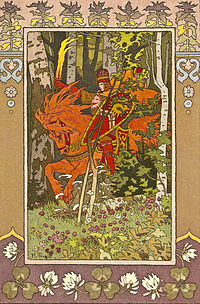
Ivan Bilibin's illustration of "Vasilisa the Beautiful"

Fairy tales and folktales get handed down, repurposed, and woven into new contexts and patterns every day. We see them in ads and single-panel cartoons, in similes, short stories, and novels. And yet when you ask Western people to tell you the story of, say, Little Red Riding Hood, they’ll probably come up with a lot of the same basic stuff. Some people wonder why stories so well known can continuously find new life; others bemoan the loss of variety folk traditions used to have before they became standardized by the Brothers Grimm and Disney.

But for writers, the fact that there’s a “standard” version of most popular fairy tales is a boon.

The Power of Foil Narratives

When you retell a fairy tale, or when you use a fairytale motif in a scene, chapter, or sentence, you draw on a shared cultural background with your reader. Whatever you say with your fairy tale contrasts with whatever they already know. Initially, that sounds a bit unappealing (if you retell “Beauty and the Beast,” your story gets thrown up next to a golden ball gown and a singing teapot, whether you like it or not). But it really is an immensely powerful tool.

You’ve heard of foil characters, yes? Two characters who share certain things and throw their differences into relief? Using foil characters is a good way to strengthen your characterization and drive interest. With fairy tales, you get an entire foil narrative. Even if your story or scene shares very little with an “original” fairy tale (original is such a messy word when speaking of folklore), if you have a character wearing a red hood, you can evoke an entire parallel plot line that can throw your narrative into relief. Each choice you make gains force and momentum because it contrasts with the story your reader already has in his or her head.

Stories That Rely on Foils

You can use fairy tales as foil narratives in all sorts of ways, and as I said before, you don’t have to write a story that is solely a retold fairy tale to do it. Permit me a few examples.

  • Disney’s Enchanted is only really funny because viewers have a background in Disney fairy tales. Without them, the humor is much weaker.
  • Ditto with Shrek, only it’s much funnier because it contrasts with an entire tradition of animal bridegroom stories (“Beauty and the Beast,” “The Frog Prince,” etc.).
  • Roger Zelazny and Robert Sheckley embedded “Sleeping Beauty” into their novel Bring Me the Head of Prince Charming. The portion of the book that is a retold tale follows the standard exactly—prince fights his way through briars, kisses the sleeping princess into wakefulness, marries her, and resolves to live happily ever after—but the frame story of a demon playing puppet master lets the standard make a statement about free will.

Using Foils in Your Stories

You can employ a foil fairytale narrative by retelling a tale or merely evoking the idea of it—your reader already has the story in his or her head, so you don’t necessarily need to lay it out explicitly for them. Whether you’re embedding an abbreviated version of a tale in a scene or chapter, retelling the whole thing, or simply setting up a pleasant metaphor, you need give only the basic motifs because the standard fairy tale can do the rest of the work for you (you can give more, of course, but it isn’t necessary).

Some more examples.

  • To evoke “Little Red Riding Hood” use motifs like a waiting wolf, a journey through the woods, a basket of goodies, a red hood, or an ugly grandmother.
  • To evoke “Cinderella” use a glass slipper, a pumpkin coach, a stroke-of-midnight time limit, or a fairy godmother.
  • To evoke “Jack and the Beanstalk” use magic beans, a giant in the sky, or a singing harp.

I’m sure you can come up with more motifs you could use to evoke a foil narrative in your writing, so share them in the comments. Also share your favorite retold tales, or even your favorite “original” versions (I’m partial to bloody animal bride/bridegroom stories, myself).

Filed Under: Publishing Tagged With: Bring Me the Head of Prince Charming, character, Disney, Enchanted, fairy tales, foil narratives, folklore, folktales, plot, prose, Robert Sheckley, Roger Zelazny, Shrek

  • « Go to Previous Page
  • Go to page 1
  • Go to page 2
  • Go to page 3
  • Go to page 4
  • Interim pages omitted …
  • Go to page 9
  • Go to Next Page »

Primary Sidebar

Hire Looseleaf

· Reserve a Fiction Manuscript Evaluation
· Other Editing Services
· Design Services
· Contact Looseleaf

Testimonials

She really made my book shine by offering insightful and helpful feedback and catching more inconsistencies than I could have ever managed on my own.
Madison Custudio, contemporary romantic fantasy author
Kristy’s talents and hard work on the book’s layout and design can be seen on every page.
Brandon Sanderson, NYT bestselling fantasy author
Kristy does a fantastic job every time. She’s punctual, thorough, affordable, and great to work with.
Brian McClellan, fantasy author
Kristy took me through the formatting process with ease and assurance. I quickly trusted her and her opinions and knew that the end result would be a quality product. … She is talented, creative and professional in all aspects of her services.
Cynthia Anderson, nonfiction author
Kristy is a joy and a pleasure to work with. She works quickly and efficiently with steep deadlines, and has an eye for detail that has helped me tremendously. … I highly recommend her.
Charlie N. Holmberg, Wall Street Journal bestselling author
Through several iterations of my manuscript, Kristy has been relentless in showing me where pieces were in the wrong place, were starved for elaboration, or belonged in an entirely different puzzle. … I don’t want to imagine what my project would look like without her.
Ron Felt, literary fiction writer
I have used Looseleaf for a number of projects, and have always been incredibly pleased by their speed, quality, and professionalism. … Phenomenal work, and I’ll definitely continue to use them for every project I can.
Dan Wells, New York Times bestseller

Newsletter signup

Please wait...

Thank you!

Footer

About Us

Looseleaf Editorial & Production was founded in 2011 with one goal: to help authors and publishers get their books ready for readers.

We specialize in top-notch editing and reader-focused design to help your story shine.

Let us help you next!

Contact Us

Our Work

This One’s For You by Kate Sweeney

This One’s For You by Kate Sweeney

Empire & Oracle

Empire & Oracle

Neom by Lavie Tidhar

Neom by Lavie Tidhar

Recent Articles

New Content Disclosures Policy

April 29, 2022 By Kristy S. Gilbert

Meet the Looseleaf team: an image with three headshots in it.

Looseleaf Is Growing!

March 15, 2022 By Kristy S. Gilbert

LTUE 2022 Schedule

January 10, 2022 By Kristy S. Gilbert Leave a Comment

Copyright © 2026 · Looseleaf Editorial & Production · Log in