• Skip to main content
  • Skip to primary sidebar
  • Skip to footer

Looseleaf Editorial & Production

Book Editing & Design

  • Editing
    • Big-Picture Editing
    • Line Editing
    • Copyediting & Proofreading
  • Book Design
    • Book Layout
    • Ebook Formatting
    • Other Graphic Design
  • About
    • The Team
    • Our Work
    • Find Your Fit
    • Testimonials
  • Resources
    • Resources
    • Events
  • Blog
  • Contact

writing advice

Pack Rat Perks: Why Keeping All Your Ideas Comes in Handy

June 18, 2012 by Kristy S. Gilbert 4 Comments

We all have a lot of ideas. Not all of them are good ideas, and many get junked. But for writers and other creative types, if you can find a way to squirrel away even your bad ideas, you can earn some serious benefits.

Analogy Time

Two young women playing water polo
I’m #4, with the white cap. I don’t know #7’s name, but I’m sure I made her life miserable during that game.

Permit me an analogy. I’m in the middle of my first pregnancy (the first trimester of morning sickness is why I fell off the grid for several months). I also desperately need to exercise, and I currently live in the middle of West Texas, so I’m doomed to day after day of temperatures above 100 degrees. A simple solution: go to the pool down the road and swim laps to my heart’s content. Unfortunately, that means finding a swim suit that accommodates my five-months-pregnant, penguin-like silhouette.

However, I swam all through high school, played water polo for four years, and lifeguarded and taught swim lessons all through college, so I’ve gone through my fair share of swim suits. Buying one I’ll only wear while pregnant is an expense that would irritate me. I’m also a bit of a pack rat, so I don’t think I’ve thrown away more than two of the suits I’ve owned since age 15. Most of the suits are either semi-translucent (or transparent) and/or have tears at the seams. But I’ve never been able to feel good about throwing a suit away, so I keep them stashed in a mesh bag in my closet.

Having all those less-than-ideal suits around has paid off: when I combine two or three semi-transparent and semi-worn-out suits, the result is one fully opaque suit that has room for my current belly. Chlorine, here I come!

Writing Application

The same principle applies to writing ideas. Even if one isolated idea can’t carry its own story or essay, that doesn’t mean it’s useless. Be a pack rat: Stash the idea in a writing notebook, type it up in a random note file on your computer, or even write it on a slip of paper and bury it in a Mason jar. If you can find a place to stash your ideas, even your bad ones, you can’t lose.

Worst-case Scenario: If the idea doesn’t ever pan out, you’ve still created a habit of recording your ideas and inspirations. That means that when you do have ideas that will pan out, you already have a system set up to capture them.

Best-case Scenario: You later realize that the idea wasn’t so bad after all, and if you tweak it just so, you can write something brilliant.

Middle-of-the-Road Scenario: If you put two or three less-than-complete ideas together, you could very well end up with something stellar and adaptable. Pieces of ideas are easier to adapt to new circumstances and requirements than complete, fully formed story or essay ideas (just as partially worn-out swim suits are better at accommodating huge body changes).

So come up with a notebook, file, or container for your ideas and start a being an idea pack rat. Even if that pack-rat system is just a mesh bag in your closet, you may be surprised at what you’re glad you held onto.

Filed Under: Publishing Tagged With: brainstorming, ideas, writing advice

Cultivate Creativity in Your Day Job & Down Time

February 13, 2012 by Kristy S. Gilbert 4 Comments

Creative Color in Your Day-to-Day

Before “breaking in” to a regular income–producing readership, most novelists, poets, and essayists toil away at day jobs while wordsmithing on the side. But just because you have a day job doesn’t mean you can’t exercise your creativity during the 9–5 grind. When you cultivate creativity in your day job and down time, you can approach your creative writing with a greater capacity to generate interesting ideas to communicate and intriguing ways of communicating them.

Creativity = Problem Solving

Creativity isn’t magic. There isn’t an Idea Muse who sends you incantations that conjure eloquence onto your blank pages. Creativity, at its most basic, is problem solving. It’s looking at the materials in front of you and devising a way to make them fulfill a need or desire you have. Author John Brown and the cast of Writing Excuses talked about this in a particularly good episode about the creative process.

Recognizing creativity as problem solving takes out a lot of the mystery of exercising it. There are problems that need to be solved in every situation a human being inhabits, and there are a few main steps to creatively solving problems in any given circumstance.

Learn your materials. Understand what you have available to help you solve your problem (whether that’s scissors, humor, or tax law). Be aware of your surroundings and resources.

Acquire your target. Most times you won’t have to create problems: they’ll come to you. Whether the problem is your children’s unwillingness to eat vegetables or all your wasted time at a slow desk job, there’s bound to be one or two basic issues you have to face regularly.

Apply your materials to your target. Obvious, isn’t it? Take what you have around you and use it to solve the problem in front of you. Find a way to make your grumpy coworker laugh; improve the office filing system; create a new product that fills a niche. Every time you find a new way to solve a problem, you become a little more practiced in the skill of creativity.

Problem Solving = Creative Writing Solutions

Using the process of knowing your resources and applying them to a specific target lets you practice a process that crosses over into your writing directly. When you’re writing, there are some tools you always have in your toolbox: plot, character, genre conventions, metaphor, scene changes, chapter breaks, punctuation, etc. You can use these in conventional ways, or you can turn them to unorthodox uses. (Similarly, you can use scissors as scissors or as an extension of your arm that helps you retrieve a document from the crevice between your desk and the wall. Or, you know, as a murder weapon or something.) If you keep an awareness of your resources and your target, you can use your exercised creativity chops to find inventive solutions that will delight a reader.

In each writing project you’ll also have project-specific tools: a character’s penchant for plums, the rhyme scheme you’ve been using for four stanzas, the death-theme you began on page 1. These are probably where the day-job creativity practice is most useful, especially the practice of making yourself aware of resources. The more aware you are of the tools you’ve given yourself, the better you’ll be at adapting those tools to plot twists, character arcs, and giving your reader a rollicking reading experience.

Creativity isn’t magic: it’s your applied problem solving skill. So the next time you run into a 9–5 roadblock, ask yourself, “How creative can I be today?”

Image by Simon Howden via FreeDigitalPhotos.net

Filed Under: Publishing Tagged With: creativity, day job, John Brown, writing advice, Writing Excuses

5 Tips for Popularizing Your Scholarly Writing

January 11, 2012 by Kristy S. Gilbert 1 Comment

Though I frequently post about fiction, a lot of what I edit is nonfiction, especially scholarly theses, dissertations, journals, and books. Every realm of scholarship adds something to our lives, and having the chance to work with scholars from different fields is something I relish about my work. The trouble is that most scholarly research never leaves the halls of academia to find a general audience.

It doesn’t have to be that way, and ideas don’t necessarily have to be dumbed down to reach a general audience. If you’re a scholar who wants to popularize some of your scholarly work, here are a few principles you should follow.

Define Your Terms

Old BookIn scholarly writing, you and your academic compatriots have a lot of words you use as shorthand for ideas. This is useful: it helps you understand one another, it helps you know who’s done their background research, and it saves you a lot of time spent explaining yourself. But if you’re adapting your research for a general audience, you need to cut back on the clique vocabulary. Try to use more common words for the concepts you’re talking about. If you still want the ease of using your field’s jargon, make sure you take some time to define the term you’re using before you put it in every other paragraph. You should also do this if you’re using a common word in an uncommon way.

Example: My research led me to reevaluate my stance as a prescriptivist, as someone who clings to grammatical rules instead of looking at how language is commonly used.

Make Your Method Clear without Madness

In many sciences (both hard and soft), research papers and articles include a section about the method for a study or experiment. This description is important because it shows your study was rigorous and you did what you could to remove bias and skewed results. However, most of your talk of double-blind studies and chi-squared tests isn’t going to be immediately familiar to a general audience. Complicated setups and endless statistics sometimes end up translating into unmitigated madness.

So ditch your methods section. Instead, weave parts of your method into your conclusions. When you say this chemical probably contributes to cancer, explain that you believe that because your statistical analysis was based on a large sample size and you used a standard level of skepticism; don’t explain how you determined your sample size and set a low alpha value as your significance level.

When you make your method a part of your conclusions, it’s easier for a general audience to understand why certain parts of your setup are important. If a part of your method doesn’t fit in the discussion of your conclusions, you might not need to include it at all for this particular audience.

Put Yourself in Your Writing

The UniverseTo make your research more accessible, it’s important to include a human element. Since you are a human, you can stand as that element. You might want to explain why this research is important to you and why the topic draws your interest. Are you fascinated by the depths of the universe? So are a lot of people you aren’t astronomers. Let them see your enthusiasm and they’ll be drawn into your writing. If you found something that made you reevaluate your previous positions, explain how surprised you were. It’ll make you more personable.

Most scholarly writing aims to remove your personal objectivity from the equation, but when you’re popularizing your work, put yourself into your writing. It will make you a better guide for your readership if they understand that you are a person.

Invite Your Reader In

Another way you can add a human element to your research is to invite your reader (who is also human) into your writing. Relate your research to your readers’ daily lives, to their aspirations, to questions and curiosities they may have had. Use analogies your reader relates to when you explain dense concepts. The more you make the topic relevant to your readership, the more interest they’ll have.

You do this same sort of thing with the literature review that is typical in many scholarly formats. With your literature review you relate to previous researchers and your academic community: your readers. With general writing, your readership is different, so you need to find different ways to relate to them.

Present Your Takeaway Often

Virus RepresentationThe last thing you can do to reach a general audience is the most important: tell your reader why your research matters. If your chemical engineering breakthrough could help create viable and affordable electric cars, explain how (this part of the breakthrough makes the concept cheap; that part makes it super effective); if your study of ancient literature uncovers elements of Jung’s collective unconscious, explain how understanding the collective unconscious helps an individual; if your sociology study unearths an interesting concept about families, point out how it could relate to the reader’s family.

When you relate your conclusions to your reader’s life clearly and often, it’s easier for your reader to understand why your research is important. That’s the reason you started researching in the first place, isn’t it?

Book image by healingdream via FreeDigitalPhotos.net
Starscape image by nuttakit via FreeDigitalPhotos.net
Virus image by renjith krishnan via FreeDigitalPhotos.net 

Filed Under: Publishing Tagged With: general audiences, nonfiction, scholarship, writing advice

Villainous Characterization Techniques

January 4, 2012 by Kristy S. Gilbert 3 Comments

A couple weeks ago I wrote a post about humanizing your book’s villains. Today I’m going to analyze some humanized villains and talk about the specific traits and techniques that make those villains more human and interesting—I’ll even show a humanizing element that can save your villain from being completely flat. Because any villain’s characterization can span an entire book or series, let me preface this post by saying it’s probably full of spoilers. I’ll keep them as mild as I can, but if you want any of these books to remain completely unspoiled, avoid reading that book’s section and skip to the technique summary at the end.

Lord of the Rings: Gollum

Lord of the Rings, J.R.R. TolkeinI’ll start with the book most of you won’t mind having spoiled. Gollum from Lord of the Rings is the most humanized villain in the trilogy (some might even argue that he’s not much of an antagonist because he helps so much). J.R.R. Tolkein humanizes Gollum by making him utterly pitiful. The heroes of not only Lord of the Rings, but also of The Hobbit pity Gollum, and the reader does too. He’s a lonely, mostly deranged creature that is driven by something other than his own rational thoughts. His addiction to the ring has made him less than his own halfling. Because the reader can feel sorry for Gollum, it’s hard to hate him completely, and his villainous actions are more impactful. When he falls back into actions driven by his addiction, the reader aches a bit because he couldn’t resist it forever.

Villainous technique: Make your reader pity the villain.

The Last Unicorn: King Haggard

The Last Unicorn 40th Anniversary CoverThrough much of Peter S. Beagle’s The Last Unicorn there is no physical antagonist impeding the unicorn’s quest to find the rest of the unicorns. Once King Haggard arrives on the scene, he fills that role. Haggard lacks the human ability to be happy, which you might think would make him less than human, but he lacks this ability because of a common human failing: he doesn’t know what would make him happy. This selective ignorance drives Haggard’s deepest flaw, and it’s also something many people in the world share. Lots of people don’t know what will make them happy. Many of them spend years in pursuit of something they think will make them happy, but because they didn’t know what would make them happy, they end up unhappy, just like Haggard. Haggard’s ignorance is his most endearing factor (and it makes you pity him a bit, just like Gollum).

Villainous technique: Give your villain some ignorance your audience shares or sympathizes with.

Blackdog: Tamghat

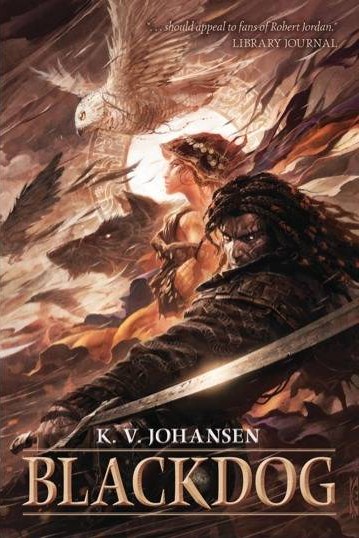
Blackdog by K.V. JohansenTamghat in K.V. Johansen’s Blackdog isn’t exactly a poster boy for a humanized villain (although I loved the book, I didn’t think he was even that memorable). However, one thing that kept him from being completely flat was Johansen’s use of a foil character. Tamghat is the villain, but he shares a lot of backstory with Moth, a character who the reader is supposed to like and sympathize with. Because readers learn Tamghat’s backstory (and thus, much of his motivation) from a foil character they like, it’s easier to understand his motivations and follow his goals.

Villainous technique: Introduce a sympathetic foil character that shares some of your villain’s traits.

I Am Not a Serial Killer: Dan Wells

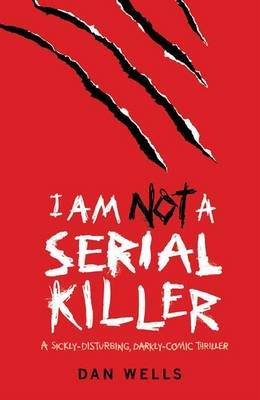
I Am Not a Serial Killer, Dan Wells(Heads up: This is probably the most spoiler-filled section.) Dan Wells’s I Am Not a Serial Killer has a very humanized villain, Mr. Crowley. As the book’s antagonist, Crowley is behind a series of killings in the main character’s home town. However, his motivation is what makes him incredibly human. He kills because he needs to steal body parts so he can stay with his elderly human wife, who he fell in love with even though he’s a demon. He gets caught for his killings because he doesn’t want to have to go far from his wife to harvest body parts. Crowley displays traits that most people would consider admirable: love, fidelity, and consideration for someone he’s been with for a very long time. The fact that these traits drive him to a horrible outcome makes that outcome more powerful.

Villainous technique: Give the villain morally admirable traits (which can sometimes lead to morally reprehensible results).

These are really just a few ways you can make your villain more dynamic. How have your favorite authors humanized some of their villains?

Filed Under: Publishing Tagged With: Blackdog, character, Dan Wells, I Am Not a Serial Killer, J.R.R. Tolkein, K.V. Johansen, Lord of the Rings, Peter S. Beagle, The Last Unicorn, villains, writing advice

Humanize Your Book’s Villain

December 19, 2011 by Kristy S. Gilbert Leave a Comment

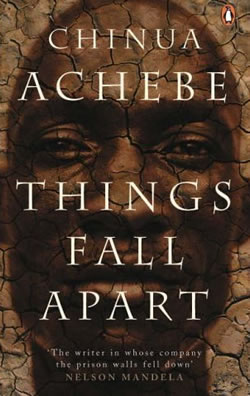
Things Fall Apart by Chinua AchebeYour book’s villain or antagonist is probably the reason why you have a story to tell. He or she is the one who causes the protagonist’s problems, stands in the way of the protagonist’s desires, and completes the conflict that lies at the heart of your story. Even so, many writers (not always newbies) neglect to make the villain a compelling character in his or her own right. When your villain is a one-dimensional character, your story’s conflict also becomes one-dimensional and you miss out on a prime opportunity to make your book more compelling.

The answer? Humanize your villain.

Humans are complex beings; nobody has only one dimension to them. Even real people you dislike have more to them than that one annoying habit that drives you up the wall. I’d venture to bet that people are so complex that you can find common ground with anyone on this planet if you have a chance to interact with them long enough. So there is absolutely no reason why your books’ antagonists can’t have complex motivations, competing impulses, and maybe even a bit of goodness in them.

An Example: Achebe’s Okonkwo

To illustrate my point, I’m going to use an example of writing that humanizes with painful precision (although the character I’m going to be using is the protagonist, not the antagonist). In Things Fall Apart by Chinua Achebe, the main character, Okonkwo, is a strong and fierce man. I hated him. He beat his wives and killed children. Even though those actions were acceptable in his culture, he did them in ways that discomfited and outraged his peers. Almost everything he did made me hate him more. (So much so that I probably would have stopped reading the book had it not been assigned reading. I came to be very grateful that I read the entire book; it’s on my list of best eye-opening experiences.)

[Slight spoiler] A point came in the novel in which Okonkwo is summarized. A stranger takes one element of Okonkwo’s life and uses it to create a summary and “understanding” of him that supposedly stands for his entire life. [/Slight spoiler]

That moment broke my heart. My heart broke for a man I detested, because he was such a complex person that seeing him reduced in that manner was horrifying.

The key to making me sorry for Okonkwo was the fact that Achebe made Okonkwo a man. Not a straw man, not a cardboard cutout, but a man. Most things in that man irritated me. Some I could understand. Okonkwo was proud and never wanted to be seen as less than a paragon on manhood by everyone around him. I’ve never tried to be a paragon of manhood, but I have felt the pressure of other people’s eyes and the need to look capable. I’ve never felt like those feelings could justify the sort of things Okonkwo did, but I’ve felt those feelings.

Means to a Humanized End

What’s the takeaway from all this? Your antagonist doesn’t have to be one-dimensional to be villainous. I found Oknonkwo villainous, but reducing him to less than he was offended me. Your villain can be a heinous human being, but make him or her a human being. Here are some ideas on how to do it:

Give your villains more than one reason for their actions. We all do things for a variety of reasons. Very rarely does one motivating factor determine all our actions. If your antagonists wants to take over the world—or even just the corner store—give them more than one reason. It will make their goals more realistic and their means more understandable. Okonkwo wanted to look good in front of others, to be a good father, and to defend his culture against invaders. Those motivations all influenced his actions.

Give your villains universal traits. Everyone has felt embarrassed, angry, hurt, and betrayed. All of us may not have felt those things to the same extent, but we’ve all felt them. If your villain can act on traits that your reader understands, even if your villain’s reactions are more extreme than what your reader’s, the reactions will be more human. Okonkwo feared shame above all else, and that’s something I could sympathize with.

Give your villains a reason to think they’re heroes. Everyone is the hero of his or her own life story. When you’re crafting your villains, consider things from their points of view. Would they be able to justify these actions to themselves? Their mothers? Maybe your villain is motivated by love, by family duty, by a desire for security. If your villains are motivated by a goal your reader shares, their actions will be more believable and even more horrifying. Okonkwo thought he was fulfilling his role as a man; the idea that his actions were what it took to be a man made my insides roil.

Your villain’s actions need to be as realistic and as human as your hero’s. When both of them are multidimensional and realistic, the conflict between them becomes more engrossing. The more you engross your readers, the more they’ll keep coming back to hear your stories.

For more tips, check out this post about villainous characterization techniques.

Filed Under: Publishing Tagged With: antagonists, character, fiction, villains, writing advice

Weekly Roundup: 10/29–11/4

November 4, 2011 by Kristy S. Gilbert Leave a Comment

Locus Online: World Fantasy 2011 Winners

Locus Online has posted the results of the World Fantasy awards, which were awarded at the World Fantasy Convention last weekend. I haven’t read the best novel (though I’ve read or will soon have read much of the short list), or any of the shorter fiction, but I am in the middle of reading the winner for best anthology, My Mother She Killed Me, My Father He Ate Me, edited by Kate Bernheimer. Thus far I’ve found it excellent. My review will come out after I actually finish reading all the stories.

Nathan Bransford: Are You Participating in NaNoWriMo?

In case you writers didn’t already know, National Novel Writing Month (NaNoWriMo) started earlier this week. If you’re up for the challenge, commit to writing 50,000 words in a novel this month. If you want to get in on the biggest online party the writing community has, jump on the NaNo bandwagon. If you haven’t started already though, you’re going to need a boost to make up this week’s word count. So look to Nathan Bransford’s compilation of NaNoWriMo-related advice.

Publishers Weekly: Survey Says Library Users Are Your Best Customers

This week PW put out an article describing a new research survey that illuminates the contribution libraries make to the publishing industry. Many readers report buying books of authors they have read in the library, and there are a host of other findings.

Liz Castro: Where Should an Ebook Begin?

Ebook wiz Liz Castro explains how to make your ePub file guide a reader to the first chapter of your book when a reader opens it (instead of, say, the cover). I disagree with Liz—I like to see the cover first—but I do agree that the frontmatter of ebooks can get painfully excessive. Outside of the table of contents, I’m a fan of putting what is traditionally frontmatter (like copyright pages, etc.) at the back of the file.

David Carnoy: Amazon Launches Free E-book Borrowing for Prime Members

Now as a part of Amazon’s $79.99/year prime membership, Kindle owners can borrow one ebook at a time, free of charge, with no due date. Kind of like Netflix, but for books, and the prime membership also includes Amazon’s video service. Not all books are a part of the program, as it depends on publisher consent.

Filed Under: Publishing Tagged With: Amazon, ebook formatting, ebooks, ePub, fairy tales, folktales, Kate Bernheimer, libraries, Liz Castro, Locus Online, My Mother She Killed Me My Father He Ate Me, NaNoWriMo, Nathan Bransford, World Fantasy, writing advice

Weekly Roundup: 10/8–10/14

October 14, 2011 by Kristy S. Gilbert Leave a Comment

Kern Type ScreenshotKern Type: A Kerning Game

This may not appeal to many book people, but type nerds will appreciate this kerning game from Method of Action. From the game instructions: “Your mission is simple: achieve pleasant and readable text by distributing the space between letters. Typographers call this activity kerning. Your solution will be compared to [a] typographer’s solution, and you will be given a score depending on how close you nailed it. Good luck!”

Tony D’Souza: When to Stop Working on Your Book

Novelist Tony D’Souza describes all the work and years he put into his manuscript Voyage of the Rosa … and then explains how he let it go and started something else. Letting a book die is something many writers have a problem with. Having an objective eye to help you know when to let something lie is a huge benefit. Indie publishing means anything can be published, but not everything you write is something you should sell. D’Souza explains how his masterpiece became a monster; maybe his story can help you avoid similar pitfalls.

Amazon: Amazon Launches a New Imprint

Amazon is launching a new science fiction, fantasy, and horror imprint called 47North, and has announced the first run of titles.

Rose Fox: Someone at Amazon Launches a Speculative Fiction Imprint

In light of the 47North announcement, Rose Fox expresses concern that nobody seems to have stepped forward to claim the imprint from an editorial standpoint. She raises questions over whether or not the editorial side has much genre experience. She sounds a bit hostile (and she admits that she is), but she raises some good points regardless.

Stacy Whitman: FAQ: Muslim Protagonist

Editor Stacy Whitman of Tu Books answers a question from one of the writers submitting to her. The writer wonders if a Muslim protagonist isn’t relatable enough for a widespread audience. This writer really shouldn’t fear: he or she is submitting to Tu Books, which has the great goal of adding diversity into YA and middle grade science fiction and fantasy. In Stacy’s words: “When we say ‘about everyone, for everyone,’ we mean everyone. Except maybe Sauron.” In her post, Stacy focuses on what makes a character more or less relatable. Especially when you’re dealing with speculative fiction, that doesn’t mean your reader shares a background with the character.

Carolyn McCray: “Price Pulsing”

Over at Digital Book World, Carolyn McCray gives some Amazon-sales advice in her article, “‘Price Pulsing’: the Benefits of Dynamic Pricing on Amazon.” She describes a method of temporarily lowering your price for promotional purposes to boost you in the Amazon rankings before you put your book back at retail price. It’s essentially a sale, but McCray explains the strategy behind the sale.

Filed Under: Publishing Tagged With: 47North, Amazon, business of writing, Carolyn McCray, diversity, fantasy, horror, Kern Type, kerning, Muslim, pricing, Rose Fox, science fiction, speculative fiction, Stacy Whitman, Tony D'Souza, Tu Books, typography, weekly roundup, writing advice

Weekly Roundup: 10/1–10/7

October 7, 2011 by Kristy S. Gilbert Leave a Comment

Writing Excuses: Hollywood Formula

This week’s episode of Writing Excuses is a gem. Lou Anders, from Pyr joins the regular crew to talk about the Hollywood formula, which centers around three main characters and their relationships. Lou says the formula is a method many screenwriters use to ensure they’re getting the best emotional effect possible from their story’s climax. It’s well worth the listen, I assure you.

Roz Morris: Four tips for writing good prose

Writer Roz Morris gives four great tips on getting your prose right. I especially like her second tip, “Develop an ear.” I’ve edited for writers who have excellent vocabularies and clear ideas, but the sentences they write are like poorly paved roads. Your readers needs to be able to glide through your words, hit the beats you need them to hit, and continue through your story.

Emily Books: An Indi(e) Bookstore

Emily Books is a new indie bookstore that sells a subscription to 12 ebooks a year (the owners hope to sell a larger variety later, but will always keep the subscription model). They embrace ebooks, and they say, “We want there to be a million stores like Emily Books, with dedicated booksellers—not algorithms—deciding which books to recommend. When a monolith is in charge of selecting which books readers get to hear about, everyone loses. We think independent bookselling is good for publishers, authors, and readers!” It’s an interesting idea in the realm of content curation. Not sure Emily Books would be the bookstore for me, but it would be interesting to see more curator-style stores popping up.

Lou Anders: The Tangled Webs We Weave

Lou Anders makes his second appearance in this week’s roundup with his essay “The Tangled Webs We Weave.” The essay will only be available online for a limited time, but it appears in Webslinger: SF and Comic Writers on Your Friendly Neighborhood Spider-Man, which is edited by Gerry Conway. Lou aims his essay at how science is becoming less sexy in our culture, and how media both reflects and contributes to that change.

John Scalzi: Writer Beware and “The Write Agenda”

Author and SFWA president John Scalzi discusses a new group called The Write Agenda. This group is determined to discredit resources aspiring authors have used for years to keep tabs on industry scammers. TWA seems to make hefty use of boycott lists and one-star reviews on books written by authors they don’t agree with. Leaving one-star reviews for anything other than the contents of the book is a ridiculous practice regardless. Read Scalzi’s write up and be cautious.

Filed Under: Publishing Tagged With: Emily Books, indie bookstores, Lou Anders, prose, Pyr, Roz Morris, weekly roundup, writing advice, Writing Excuses

  • Go to page 1
  • Go to page 2
  • Go to Next Page »

Primary Sidebar

Hire Looseleaf

· Reserve a Fiction Manuscript Evaluation
· Other Editing Services
· Design Services
· Contact Looseleaf

Testimonials

Kristy is a joy and a pleasure to work with. She works quickly and efficiently with steep deadlines, and has an eye for detail that has helped me tremendously. … I highly recommend her.
Charlie N. Holmberg, Wall Street Journal bestselling author
She really made my book shine by offering insightful and helpful feedback and catching more inconsistencies than I could have ever managed on my own.
Madison Custudio, contemporary romantic fantasy author
Kristy took me through the formatting process with ease and assurance. I quickly trusted her and her opinions and knew that the end result would be a quality product. … She is talented, creative and professional in all aspects of her services.
Cynthia Anderson, nonfiction author
Kristy does a fantastic job every time. She’s punctual, thorough, affordable, and great to work with.
Brian McClellan, fantasy author
I have used Looseleaf for a number of projects, and have always been incredibly pleased by their speed, quality, and professionalism. … Phenomenal work, and I’ll definitely continue to use them for every project I can.
Dan Wells, New York Times bestseller
Kristy’s talents and hard work on the book’s layout and design can be seen on every page.
Brandon Sanderson, NYT bestselling fantasy author
Through several iterations of my manuscript, Kristy has been relentless in showing me where pieces were in the wrong place, were starved for elaboration, or belonged in an entirely different puzzle. … I don’t want to imagine what my project would look like without her.
Ron Felt, literary fiction writer

Newsletter signup

Please wait...

Thank you!

Footer

About Us

Looseleaf Editorial & Production was founded in 2011 with one goal: to help authors and publishers get their books ready for readers.

We specialize in top-notch editing and reader-focused design to help your story shine.

Let us help you next!

Contact Us

Our Work

This One’s For You by Kate Sweeney

This One’s For You by Kate Sweeney

Empire & Oracle

Empire & Oracle

Neom by Lavie Tidhar

Neom by Lavie Tidhar

Recent Articles

New Content Disclosures Policy

April 29, 2022 By Kristy S. Gilbert

Meet the Looseleaf team: an image with three headshots in it.

Looseleaf Is Growing!

March 15, 2022 By Kristy S. Gilbert

LTUE 2022 Schedule

January 10, 2022 By Kristy S. Gilbert Leave a Comment

Copyright © 2026 · Looseleaf Editorial & Production · Log in