• Skip to main content
  • Skip to primary sidebar
  • Skip to footer

Looseleaf Editorial & Production

Book Editing & Design

  • Editing
    • Big-Picture Editing
    • Line Editing
    • Copyediting & Proofreading
  • Book Design
    • Book Layout
    • Ebook Formatting
    • Other Graphic Design
  • About
    • The Team
    • Our Work
    • Find Your Fit
    • Testimonials
  • Resources
    • Resources
    • Events
  • Blog
  • Contact

fantasy

Leaflet Review: Thief’s Covenant by Ari Marmell

February 21, 2012 by Kristy S. Gilbert 4 Comments

Thief's Covenant, Ari MarmellOnce she was Adrienne Satti, an orphan with a rags-to-riches story.

Now she is Widdershins, a thief with a sharp blade, a sharper wit, and help from a secret god living in her head.

But now something horrid, something dark, is reaching out for her, a past that refuses to let her go …
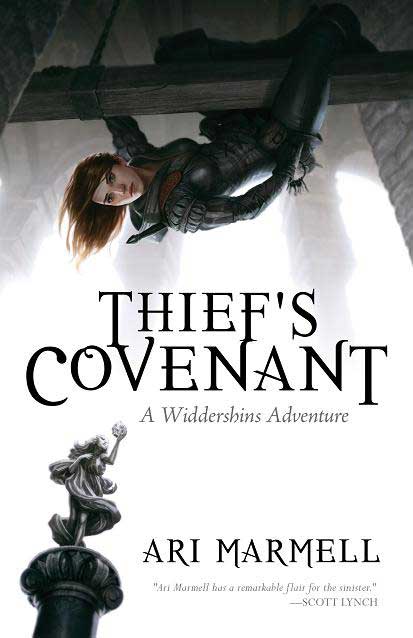
This is another book that was on my “books to look for in 2012” list. (It’s also on the list of books Lou Anders convinced me to buy with alarming ease. The guy’s a freaking hypnotist.) Before I start the review, I want to share a note about the cover. The image in this post and the cover on my book are different in one way that is significant to me: the apostrophe on my book is a curly quote, not a straight one. I can no longer tell if straight quotes bother me for true aesthetic reasons or because I’ve been trained to eradicate them, but they stab my soul one way or another. However, my scanner is rubbish, and all the online images I can find have the erroneous straight quote, so do me a favor and imagine the cover is typographically flawless, because the final product is.

Now I’ll review the actual text.

Renaissance Romp

This book has several things going for it. The plot races forward at a steady clip, seamlessly shifting from one plot arc to another. Although this is a YA book, Widdershins tackles adult issues—keeping food in her belly, balancing an investment portfolio, etc.—but she still keeps a youthful attitude and likeability. The book’s topics aren’t watered down for a younger audience either. For a novel labeled dark fantasy it’s on the light and friendly side of things, but it still fits comfortably in that sub-genre. The book also benefits from a fresher milieu than many secondary world fantasies: it is neither fully modern nor fully medieval, but takes root in a renaissance-style city called Davillon.

Although dark things happen in the book, it never stops being fun. Between Widdershins and Olgun, her personal god, nearly every page is filled with an element of sarcastic joy, despite the fact that at any given moment just about everything is going wrong. The characters make for good company, no matter the circumstances, which is not something I can say for every book I’ve read.

Some Quibbles

As with most books I review, I have a few quibbles. With Thief’s Covenant, most of them are on the prose level. Sometimes the humorous prose is overwrought, straining too hard for the laugh. Even so, there were plenty of times when it hit the sweet spot and I did laugh, and humor is more subjective than most things, so for some of you the jokes I find overwrought will hit you right on the funny bone.

There are also some more grammar- and usage-related issues: some rule-breaking that doesn’t seem to serve a purpose other than confusing me; some words (like miasma) that appear more frequently than they should (in my opinion); and some sentences I had to read multiple times to follow the action of a scene.

The good news: none of these issues stopped me from enjoying the story. It was fun, fast, and flavorful. I’ll be holding onto my copy, and the sequel, False Covenant, will most likely find its way onto my bookshelf. All minor quibbles aside, I can’t keep away from an upbeat character like Widdershins.

Cover illustration by Jason Chan.
Filed Under: Reviews Tagged With: Ari Marmell, fantasy, Lou Anders, Pyr, Thief's Covenant, typography, YA

Leaflet Review: The Rook by Daniel O’Malley

February 6, 2012 by Kristy S. Gilbert 1 Comment

The Rook by Daniel O'Malley

“Dear You,

The body you are wearing used to be mine.”

So begins the letter Myfanwy Thomas is holding when she awakes in a London park surrounded by dead bodies—all wearing latex gloves. With no memory of who she is or how she got there, Myfanwy must follow the instructions her former self left behind to discover her identity and escape those who want to destroy her.

She soon learns that she is a Rook, a high-level operative in the Checquy, a secret government agency that protects the world against supernatural threats—from sentient fungus to stampeding ectoplasm—while keeping the populace in the dark. But now there is a mole on the inside, and this person wants Myfanwy dead. […]

Suspenseful and hilarious […] The Rook is an outrageously inventive debut novel for readers who like their espionage with a dollop of purple slime, or their supernatural thrillers with an agenda and a pencil skirt.

In my first post of the year, I said The Rook was first on my list of books I look forward to in 2012 (both chronologically and otherwise). It didn’t disappoint, and I’m glad I own it so I can reread it in the future. There were a few main reasons I had for loving the book Daniel O’Malley wrote.

Premise

The pitch for The Rook intrigued me right from the start: the premise is unique because even though it follows a relatively common setup—Myfanwy Thomas lost her memory—the book tackles the concept from a new perspective. The old Myfanwy (who the “new” Myfanwy calls Thomas) has left letters, instructions, and binders full of briefing materials to guide the new Myfanwy, and the new Myfanwy is actually substantially different than Thomas. Thomas’s personality has been erased, so although both characters occupy/ied the same body and have the same skill set, they’re different people. Not to mention the fact that Myfanwy is a high-ranking official in “Her Majesty’s Supernatural Secret Service,” so it’s not like walking into her life is a walk in the park to begin with.

Voice

Any memory-loss plot will involve a lot of information being hurled at the reader (and the amnesiac protagonist), which makes such plots prone to infodumps. However, in The Rook the infodumps are laced with another thing I love about the book: a voice so playful and engaging that even personnel dossiers are a joy to read. The voice that infuses the storyline from beginning to end is a blast.

Emotion

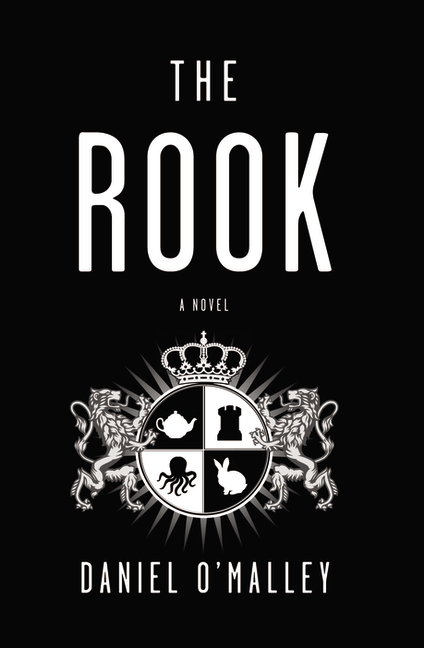
The voice helps The Rook walk the line between humor and heart. There’s no doubt that it is a funny book (if the bunny and the octopus in the coat of arms on the cover didn’t give it away, I’m not sure what would). However, it tugs at your heartstrings too. A lot of the tugging is done by Thomas, the old Myfanwy, in her letters. The way I felt about Thomas progressed through several stages, ending in an affection that almost led to tears for me when I read the last chapter (but I was strong and resisted impulses to let my tear ducts leak).

Character

The stages of my feelings about Thomas mirrored a masterful character arc. I expected Myfanwy to progress through the book, to grow from a personality newborn into a likeable hero who could save the day and beat the bad guys. That isn’t to say her growth wasn’t a pleasure to see—on the contrary, the way she grew to meet the demands of Thomas’s old job and new foes had me laughing and rooting for her cover to cover. But I think the growth of Thomas surprised me more, and shows the unique quality level of The Rook better. Thomas could have been a stagnant character, dispensing advice and knowledge from a static position of competency. With the playful voice, she could have been that way and I wouldn’t have minded a lick. But she went from a rather weak person who earned very little respect to a lovable, sacrificing tragic figure. I was terribly sad that the world at the end of the book couldn’t have both Thomas and Myfanwy.

There were other reasons I liked the book—it doesn’t rely on a romantic subplot, the supernatural powers were innovative and bizarre, the characters are people first and heroes/villains second, the beginning and end have a completely satisfying chiasmic structure—and I’m sure you can find plenty more. So get thyself a copy and enjoy the ride. Then join me in anticipating the sequel O’Malley has already promised.

You can also follow Myfanwy Thomas’s Twitter feed, @RookFiles. Prior to the book’s release Thomas tweeted, but now it’s Myfanwy. She doesn’t post often, but it’s always fun when she does.

Book jacket design by Lindsey Andrews

Filed Under: Reviews Tagged With: book review, Daniel O'Malley, fantasy, Little Brown, The Rook

Leaflet Review: The Hum and the Shiver by Alex Bledsoe

January 9, 2012 by Kristy S. Gilbert 1 Comment

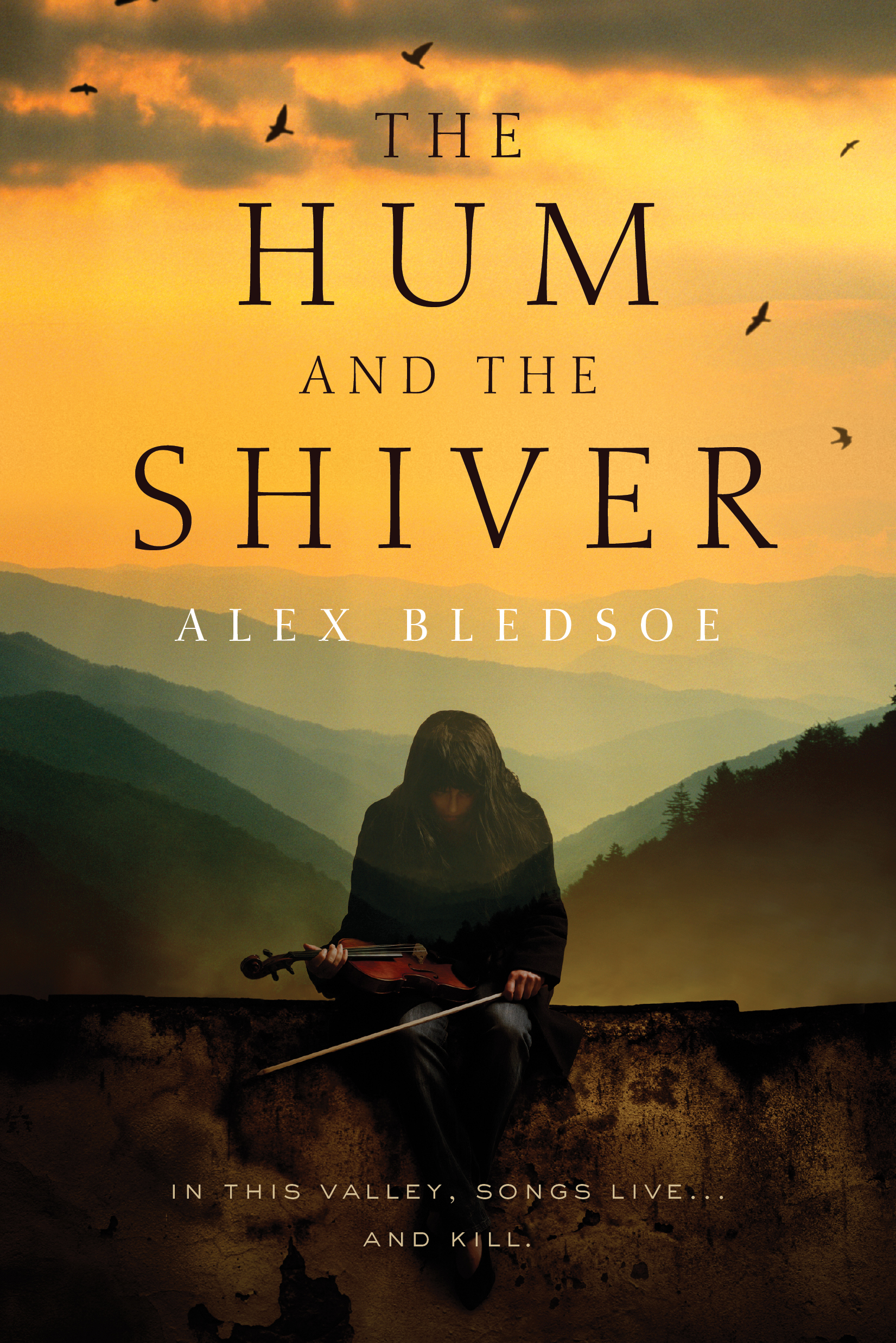
The Hum and the Shiver by Alex Bledsoe

No one knows where the Tufa came from, or how they ended up in the Smoky Mountains of East Tennessee, yet when the first Europeans arrived, they were already there. Dark-haired, enigmatic, and suspicious of outsiders, the Tufa live quiet lives in the hills and valleys of Cloud County. While their origins may be lost to history, there are clues in their music—hints of their true nature buried in in the songs they have passed down for generations.

Private Bronwyn Hyatt returns from Iraq wounded in body and in spirit, only to face the very things that drove her away in the first place: her family, her obligations to the Tufa, and her dangerous ex-boyfriend. But more trouble lurks in the mountains and hollows of her childhood home. Cryptic omens warn of impending tragedy, and a restless “haint” lurks nearby, waiting to reveal Bronwyn’s darkest secrets. Worst of all, Bronwyn has lost touch with the music that was once a vital part of her identity.

With death stalking her family, Bronwyn will need to summon the strength to take her place among the true Tufa and once again fly on the night winds. …

The Hum and the Shiver had me excited: it has an interesting premise, an interesting context, a killer title, and a visually appealing cover (can you believe it’s just straight-up photo-manipulation?). My little brother sent it to me for Christmas, because he is an awesome brother, and I read it in about two days.

Delicious Tidbits

The book has plenty of things going for it: an interesting take on contemporary fantasy (it’s definitely not urban, and none of the characters are cliche); the main character grows into a unique type of inner strength; the worldbuilding elements are delightfully fresh (music-based magic in rural Tennessee!). The elements of mystery surrounding the Tufa draw you through the book, and the cast of characters is very dynamic.

One of my favorite characters in the book was Craig Chess, the Methodist minister who has recently moved to Cloud County to work among the notoriously nonreligious Tufa. He’s awesome. He is a man who acts on his faith, who suffers fits of temper and temptation but always finds a way to deal with it, and who, although he earnestly wishes others to find the truth he holds dear, doesn’t need you to be in his congregation for him to wish you the best. He stands in stark contrast to the likes of Dwayne Gitterman, Bronwyn’s ex-boyfriend, who really doesn’t wish anyone well but himself.

Hangups

So I enjoyed the book. But I couldn’t wholeheartedly recommend it to everyone. The book’s charm very much hangs on its milieu—the unique setup, context, worldbuilding, and small-town characters. In my opinion, the plot was not particularly masterful. Some of the conflicts, like Bronwyn’s inability to play music when she first returns home, are solved with surprising ease. The viewpoint is almost confusingly omniscient (to be fair, I haven’t read an omniscient POV since I read Dune, so my distaste for this technique could just be because I’m out of practice reading it). Plot-driven readers may take issue with a character or two who have more page time than their plot purpose warrants.

After reading the last page, I put down the book and said, “Really? Really that’s how you end it?” The ending didn’t resonate with me in a meaningful way. For a book that has so much heart, it felt surprisingly hollow.

Even so …

I still enjoyed it. Knowing what I know now, I’d still have read it. It’s a rich and textured novel with plenty in its pages that will please. Its heroine has a very interesting growth trajectory that I found satisfying. Alex Bledsoe recently announced that there will be a second book in the same world called Wisp of a Thing, and I’ll likely read that book as well. It’s not a perfect piece, but like I said, it has a lot of heart, and I’m glad I had a weekend to spend on it. If only for Bledsoe’s beautifully imagined Tufa culture and folklore and they way he put magic into the mundane, I’d gladly read the book again.

Content warnings: Language, sex, discussions about sex, mature themes, some violence (but not much).

Filed Under: Reviews Tagged With: Alex Bledsoe, book review, fantasy, folklore, The Hum and the Shiver, Tor

Leaflet Review: Snuff by Terry Pratchett

December 5, 2011 by Kristy S. Gilbert Leave a Comment

Snuff by Terry PratchettAt long last, Lady Sybil has lured her husband, Sam Vimes, on a well-deserved holiday away from the crime and grime of Ankh-Morpork. But for the commander of the City Watch, a vacation in the country is anything but relaxing. The balls, the teas, the muck—not to mention all that fresh air and birdsong—are more than a bit taxing on a cynical city-born and -bred copper.

Yet a policeman will find crime anywhere if he decides to look hard enough, and it’s not long before a body is discovered, and Sam—out of his jurisdiction, out of his element, and out of bacon sandwiches (thanks to his well-meaning wife)—must rely on his instincts, guile, and street smarts to see justice done. As he sets off on the chase, though, he must remember to watch where he steps. … This is the countryside, after all, and the streets most definitely are not paved in gold.

I’ve mentioned before that I adore Terry Pratchett’s novels, right? Almost as much as I love fairy tales. And most of my favorite Discworld novels are Sam Vimes Discworld novels, so of course I had to read Snuff, Pratchett’s most recent release.

For any of you who haven’t read any Discworld novels and don’t know anything about them, let me preface this by saying that you can pick up pretty much any Discworld novel and read it without reading those that preceded it. The novels all stand alone reasonably well. That said, I’d recommend reading Thud, the last Sam Vimes novel, before picking up Snuff. There are some things I believe would make a lot more sense if you’ve read Thud.

Snuff is a fun read, enjoyably paced and full of Pratchett’s distinctive voice. Sam Vimes is just as wonderful as always: who doesn’t love a cop who does whatever he can to make the world right, while still holding himself to the law because he understands he needs it just as much as anyone? With all the TV shows with devil-may-care protagonists, Vimes stands apart. He always gets his man, but he knows when he’s crossing lines that shouldn’t be crossed, and his integrity in that is always impressive.

Praise like that for a character in a comic novel sounds a little odd, and it should. Snuff wasn’t the sort of gut-bustingly funny novel that Pratchett has turned out in the past. I didn’t laugh out loud very often (though I did still), and there wasn’t quite as much absurdity in it. The novel felt more serious to me than most of Pratchett’s work, although it didn’t reach the elegant poignancy of Night Watch, my favorite novel of Pratchett’s.

All in all, I enjoyed Snuff. I’d recommend it to people. I recommend it to you. But I can’t say that it’s the best thing Discworld has seen. Nor is it the worst. When compared to other Discworld novels, it stands up somewhere in the middle of the road. Still, that means it’s miles ahead of many other things I read.

Filed Under: Reviews Tagged With: book review, character, fantasy, Harper, Snuff, Terry Pratchett

Leaflet Review: Zoo City by Lauren Beukes

December 2, 2011 by Kristy S. Gilbert Leave a Comment

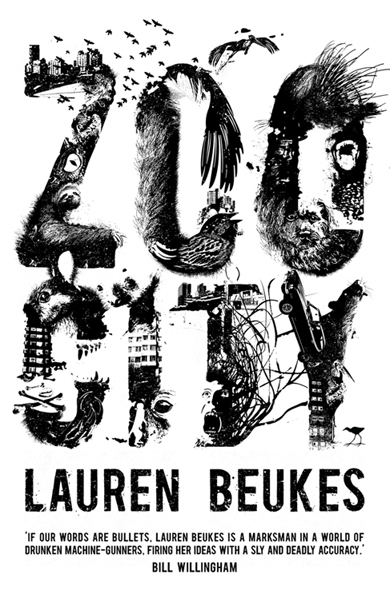
Zoo City by Lauren BeukesZinzi December has a Sloth on her back, a dirty 419 scam habit, and a talent for finding lost things. But when a little old lady turns up dead and the cops confiscate her last paycheck, she’s forced to take on her least favourite kind of job: missing persons.

I got Zoo City after the Angry Robot presentation at WorldCon, but I’d decided to read it before then. In the alternate Earth of the novel, if you’ve done something awful, you gain a magical animal companion that grants you a magic ability. If your Animal dies, a dark force colloquially called Hell’s Undertow will murder you within minutes. Zinzi December, a former drug addict and current email scammer (more or less against her will), is accompanied by Sloth and has the ability to feel a person’s lost items and follow threads from an individual to a particular lost item. Zinzi uses that skill to earn some money legally by finding lost rings and suchlike.

As you might imagine, having a visible display that you are (or have been) a criminal presents some issues. Most animalled people (called zoos) in the story live in a slum of Johannesburg, South Africa, called Zoo City. That’s where Zinzi tries to scratch out a life.

The book is told in first-person present tense, which normally annoys me a bit, but Zinzi is such an engaging narrator that I hardly noticed. Her descriptions are pitch-perfect and fresh, and her character shows in every sentence. She’s honest to the reader (if not exactly honest to other characters), three-dimensional, and you can’t help but root for her. Zinzi’s doing her best to make good in a world that won’t see past her Animal, and very few things go right for her. (Speaking of her Animal, Sloth is such a sweet little bundle of externalized guilt.)

The book’s plot is essentially Zinzi trying to piece together the truth of a mystery while piecing herself together at the same time. There were a few plot events I felt were a little less than flawless, but it was such an enjoyable ride I didn’t care.

One thing I really appreciated in this book was that it took place in a setting I’m unfamiliar with (while still being on Earth, of course). The author is from South Africa and she did a ton of research to make her portrayal of Johannesburg slums accurate. The book told a great story while expanding my awareness of other walks of life, locations, and events. That dimension of the book is something I’m especially grateful for because it came above and beyond the engaging characters and story I expected (and found).

All in all, I’m definitely going to pick up another novel from Lauren Beukes. I’ll leave you with some of the first lines of the book, which I think should convince you to go read it now:

“Morning light the sulphur color of the mine dumps seeps across Johannesburg’s skyline and sears through my window. My own personal bat signal. Or a reminder that I really need to get curtains.”

Content warnings: some language, drug references/use, violence, etc.

Filed Under: Reviews Tagged With: Angry Robot, book review, fantasy, Lauren Beukes, Zoo City

Weekly Roundup: 10/8–10/14

October 14, 2011 by Kristy S. Gilbert Leave a Comment

Kern Type ScreenshotKern Type: A Kerning Game

This may not appeal to many book people, but type nerds will appreciate this kerning game from Method of Action. From the game instructions: “Your mission is simple: achieve pleasant and readable text by distributing the space between letters. Typographers call this activity kerning. Your solution will be compared to [a] typographer’s solution, and you will be given a score depending on how close you nailed it. Good luck!”

Tony D’Souza: When to Stop Working on Your Book

Novelist Tony D’Souza describes all the work and years he put into his manuscript Voyage of the Rosa … and then explains how he let it go and started something else. Letting a book die is something many writers have a problem with. Having an objective eye to help you know when to let something lie is a huge benefit. Indie publishing means anything can be published, but not everything you write is something you should sell. D’Souza explains how his masterpiece became a monster; maybe his story can help you avoid similar pitfalls.

Amazon: Amazon Launches a New Imprint

Amazon is launching a new science fiction, fantasy, and horror imprint called 47North, and has announced the first run of titles.

Rose Fox: Someone at Amazon Launches a Speculative Fiction Imprint

In light of the 47North announcement, Rose Fox expresses concern that nobody seems to have stepped forward to claim the imprint from an editorial standpoint. She raises questions over whether or not the editorial side has much genre experience. She sounds a bit hostile (and she admits that she is), but she raises some good points regardless.

Stacy Whitman: FAQ: Muslim Protagonist

Editor Stacy Whitman of Tu Books answers a question from one of the writers submitting to her. The writer wonders if a Muslim protagonist isn’t relatable enough for a widespread audience. This writer really shouldn’t fear: he or she is submitting to Tu Books, which has the great goal of adding diversity into YA and middle grade science fiction and fantasy. In Stacy’s words: “When we say ‘about everyone, for everyone,’ we mean everyone. Except maybe Sauron.” In her post, Stacy focuses on what makes a character more or less relatable. Especially when you’re dealing with speculative fiction, that doesn’t mean your reader shares a background with the character.

Carolyn McCray: “Price Pulsing”

Over at Digital Book World, Carolyn McCray gives some Amazon-sales advice in her article, “‘Price Pulsing’: the Benefits of Dynamic Pricing on Amazon.” She describes a method of temporarily lowering your price for promotional purposes to boost you in the Amazon rankings before you put your book back at retail price. It’s essentially a sale, but McCray explains the strategy behind the sale.

Filed Under: Publishing Tagged With: 47North, Amazon, business of writing, Carolyn McCray, diversity, fantasy, horror, Kern Type, kerning, Muslim, pricing, Rose Fox, science fiction, speculative fiction, Stacy Whitman, Tony D'Souza, Tu Books, typography, weekly roundup, writing advice

Leaflet Review: Under Heaven by Guy Gavriel Kay

October 12, 2011 by Kristy S. Gilbert Leave a Comment

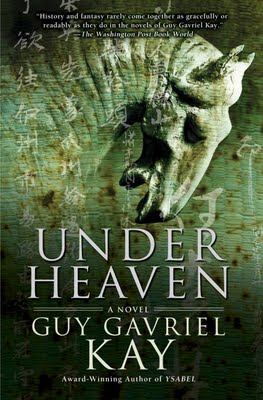
Under Heaven by Guy Gavriel KayUnder Heaven’s book jacket copy:

To honor the memory of his recently deceased father, a general who led the forces of imperial Kitai in its last great war twenty years before, Shen Tai has spent the two years of official mourning alone at the isolated battle site, burying as many of the unnumbered dead lying there as he can. The dead are equally Kitan and their Taguran foes; there is no way to tell the bones apart, and he treats them all reverently. At night Tai can hear the ghosts moan and stir, and occasionally, when one voice falls silent, he knows it belonged to someone he has laid to rest.

Both sides respect his solitary work and take turns bringing him supplies, and it is during such a visit from a Taguran officer that Tai learns powerful forces have taken note of his vigil. The White Jade Princess Cheng-Wan, seventeenth daughter of the Emperor of Kitai, sent west after this last battle to seal the peace with Tagur, is pleased to present him with two hundred fifty Sardian horses. They are being given to him, she writes, in royal recognition of his courage and piety and of the honor he has done the dead.

You give a man one of the legendary Sardian horses to reward him greatly. You give him four or five to exalt him above his fellows, propel him toward rank, and earn him jealousy, possibly mortal jealousy. Giving him two hundred fifty is unthinkable—a gift to overwhelm an emperor.

Tai is in deep waters. He needs to get himself—and his own emperor—back to court alive. Riding the first of the Sardian horses[*] and bringing news of the rest, he starts east toward the glittering, dangerous capital of Kitai, and gathers his wits for a return to his forever-altered life.

Under Heaven is the first book I’ve read by Guy Gavriel Kay. It’s not your typical kettle of fantasy—far from it. While I was reading, I tried to articulate Under Heaven’s flavor … and failed miserably. However, Kay conveniently inserts this into the book’s epilogue: “Every single tale carries within it many others, noted in passing, hinted at, entirely overlooked. Every life has moments when it branches, importantly (even if only for one person), and every one of those branches will have offered a different story.”

The book fully illustrates this idea, and it illustrates it well. There are many places where the plot takes a different turn than what you would expect from a typical, trope-laden book, and most of those differences are driven by a character choosing a different branch, even though that choice may seem insignificant at the time. This is an interesting concept, and Kay explores it well.

That said, I didn’t fully enjoy Under Heaven. For many, many chapters at the beginning, I felt that the viewpoint characters withheld information in an infuriating manner. Two characters would talk and come to a decision, then continue talking and taking action, but I wouldn’t learn what the decision was for another chapter or so. This deliberate withholding irritated me as a reader.

I probably could have overcome this problem, since it’s relatively minor. However, I ran into the same problem with Under Heaven that I had when I was reading The Good Earth in high school. The way the men in these books (who are also the main characters) think of and treat women sickens me, and I have a hard time sympathizing with them. The main character, Tai, is a decent individual overall. However, there is more than one instance in which his views towards women make me want to punch him in the face, so I have a hard time casting him in a good light when I’m constantly concerned that I’m going to want to punch him in a few pages.

All in all, this means that Kay accomplishes a good verisimilitude of ancient culture. There were many cultural institutions that were so normal that they didn’t register as cruelties or hypocrisies when they were used by upstanding citizens. Tai is better than most (if not all) of his peers. He is simply a man of his cultural moment. That doesn’t change the fact that institutions in that cultural moment irritate me.

It boils down to this: Kay does a wonderful job of telling the story he sets out to tell. It’s just not a story I was readily receptive to. There were many aspects that captured my interest, there were several characters that fascinated me, and I was happy to read the book all the way through to the end. I can even think of people I’d recommend this book to without reservations. But for me and my tastes, I’m glad I bought it during the liquidation at Borders and not at full price.
_____________________

* I would like to mention that this first horse only serves an important role for a few chapters. After that it basically fades to the background and is pure scenery. These Sardian horses instigate the plot but have little hand in it.

Filed Under: Publishing, Reviews Tagged With: Ace/Roc, book review, fantasy, Guy Gavriel Kay, Under Heaven

Leaflet Review: A Hat Full of Sky by Terry Pratchett

September 28, 2011 by Kristy S. Gilbert Leave a Comment

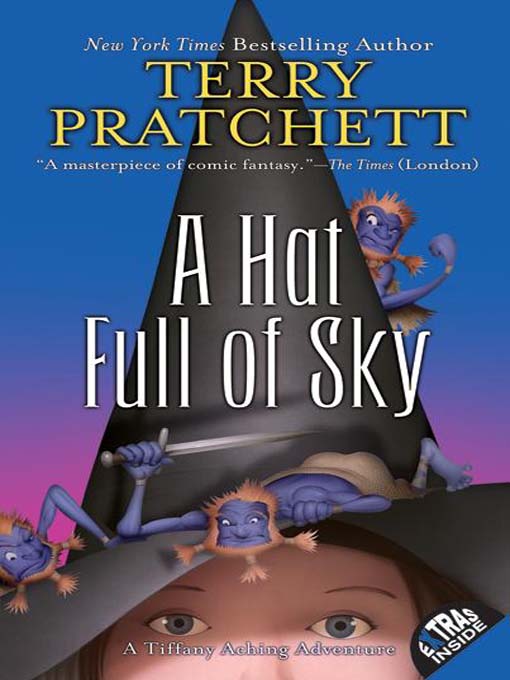
A Hat Full of Sky by Terry PratchettWitch-in-training Tiffany Aching hadn’t expected magic to involve chores and ill-tempered nanny goats! But as Tiffany pursues her calling, a sinister monster pursues Tiffany, and neither mistress Weatherwax (the greatest witch in the world) nor the six-inch-high Wee Free Men (the greatest thieves in the world) can defeat it. When the monster strikes, Tiffany will have to save herself—if she can be saved at all!

I love Terry Pratchett, so I can hardly say anything bad about his books—even though, with so many books on the market, I’m bound to not like some of them. But I liked A Hat Full of Sky. Perhaps not so much as its predecessor, The Wee Free Men, but it was still a very enjoyable book. As always is the case with Pratchett, I both laughed out loud and had a bit of thinking time to go with it.

That said, there were several times where I thought the main conflict had been resolved, only to discover there was a new conflict (though, to be fair, these conflicts were always attached and related; I just don’t think they were foreshadowed). They felt a bit tacked on, if you ask me. However, all the conflicts were thematically consistent, even if they didn’t seem to be all part of the same action arc, so it wasn’t really bad. I was just expecting a book unified by a single action; if I’d been expecting a thematic work I wouldn’t have noticed it at all.

As with The Wee Free Men, the book waxes philosophical. (What? In a children’s book? Absurd.) Pratchett gets away with it because it’s natural to the character—all the ideas are in Tiffany’s voice and they’re things Tiffany would think, what with her First, Second, and Third Thoughts running around. She’s bound to run into some heavy thinking. The other reason it works so well is that Pratchett makes you laugh while he’s going about it, and the things he talks about aren’t controversial in any way: they’re just thing you may not have thought about very much before. Like how full the universe is of things that are interesting an amazing, and how you should never reduce people to things, etc. He couches them in a context that brings the ideas home.

(As a side note, The Wee Free Men introduced ideas that I repackaged and repurposed for discussion in a literary theory class in college. My comments were referenced throughout the semester for their brilliant-ness and relevance, and I felt a little dirty not mentioning that I’d gotten them from a humorous young-adult fantasy novel. But you can’t parenthetically cite your source while you’re talking. At least, I haven’t figured out how to yet.)

That’s really what Pratchett does for me: He takes things I should know and presents them in a mirror that’s ever so slightly askew so I’ll actually see them. Defamiliarization is the term, I believe. And while he defamiliarizes he delights, so I can never complain about a Pratchett book. I’ll definitely be reading the next book in the Tiffany Aching plot arc (once I chew through the stack of books next to my desk, that is), and I’ll probably end up buying them all so future children who use my house as a library will be able to read them. I wish I’d read them as a kid.

Filed Under: Publishing, Reviews Tagged With: A Hat Full of Sky, book review, fantasy, fiction, middle grade, Terry Pratchett, young adult

  • « Go to Previous Page
  • Go to page 1
  • Go to page 2
  • Go to page 3
  • Go to Next Page »

Primary Sidebar

Hire Looseleaf

· Reserve a Fiction Manuscript Evaluation
· Other Editing Services
· Design Services
· Contact Looseleaf

Testimonials

I have used Looseleaf for a number of projects, and have always been incredibly pleased by their speed, quality, and professionalism. … Phenomenal work, and I’ll definitely continue to use them for every project I can.
Dan Wells, New York Times bestseller
She really made my book shine by offering insightful and helpful feedback and catching more inconsistencies than I could have ever managed on my own.
Madison Custudio, contemporary romantic fantasy author
Kristy’s talents and hard work on the book’s layout and design can be seen on every page.
Brandon Sanderson, NYT bestselling fantasy author
Kristy took me through the formatting process with ease and assurance. I quickly trusted her and her opinions and knew that the end result would be a quality product. … She is talented, creative and professional in all aspects of her services.
Cynthia Anderson, nonfiction author
Kristy does a fantastic job every time. She’s punctual, thorough, affordable, and great to work with.
Brian McClellan, fantasy author
Kristy is a joy and a pleasure to work with. She works quickly and efficiently with steep deadlines, and has an eye for detail that has helped me tremendously. … I highly recommend her.
Charlie N. Holmberg, Wall Street Journal bestselling author

Newsletter signup

Please wait...

Thank you!

Footer

About Us

Looseleaf Editorial & Production was founded in 2011 with one goal: to help authors and publishers get their books ready for readers.

We specialize in top-notch editing and reader-focused design to help your story shine.

Let us help you next!

Contact Us

Our Work

This One’s For You by Kate Sweeney

This One’s For You by Kate Sweeney

Empire & Oracle

Empire & Oracle

Neom by Lavie Tidhar

Neom by Lavie Tidhar

Recent Articles

New Content Disclosures Policy

April 29, 2022 By Kristy S. Gilbert

Meet the Looseleaf team: an image with three headshots in it.

Looseleaf Is Growing!

March 15, 2022 By Kristy S. Gilbert

LTUE 2022 Schedule

January 10, 2022 By Kristy S. Gilbert Leave a Comment

Copyright © 2026 · Looseleaf Editorial & Production · Log in